
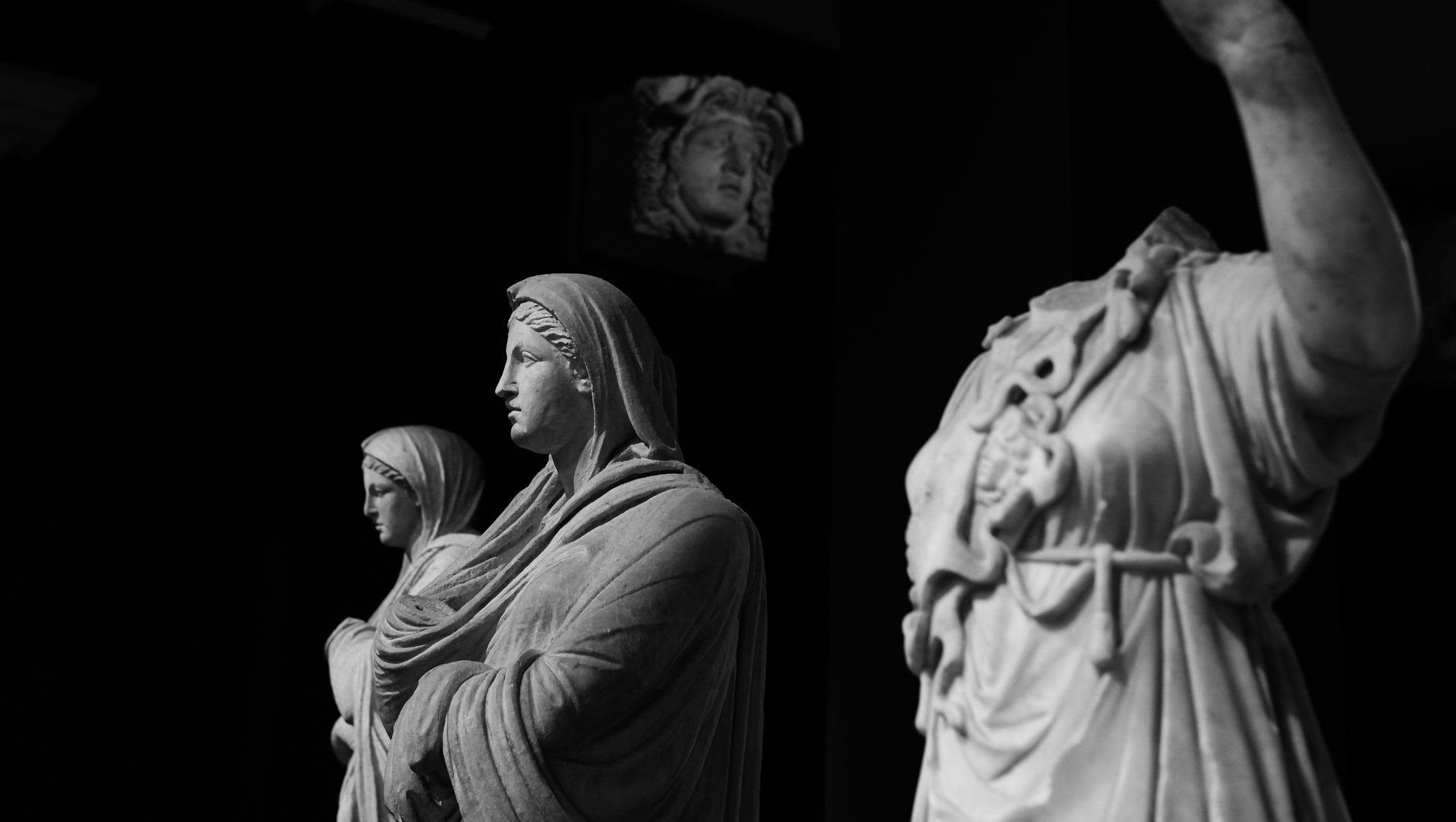
Gods and Goddesses of Rome
The great Olympian-style state gods, the spirits of the household and fields, and the cults that honored them. This cluster covers the state gods of the Capitoline Triad, the quieter gods of hearth and field, and the cults that kept Rome in the gods' good favor.
The Twelve Dii Consentes: Rome's Council of Gods Explained
Rome's twelve Dii Consentes stood as gilded pairs on the Capitoline, a council built on Roman logic, not a Latin relabeling of the Greek Olympians.
Jupiter: Rome's King of the Gods and Guardian of the State
Jupiter's power in Rome ran through oaths, auspices, and a Capitoline temple, not through the family drama that defines Zeus in Greek myth.
Mars: From Field Guardian to God of War
Mars started out guarding farms and herds; by Augustus's reign he was Mars Ultor, avenger of Caesar and father of the Roman people.
Vesta and the Sacred Fire of Rome
Vesta was a goddess with no story, only a duty: a fire in a round Forum temple whose failure counted as a danger to the Roman state.
Janus: The Two-Faced God of Beginnings and Doorways
Rome's two-faced god of doorways and beginnings had no Greek equivalent, and his temple doors tracked whether Rome was at war or at peace.
Lares and Penates: The Gods of the Roman Household
Every Roman home kept a shrine to spirits with no Greek equivalent: the Penates guarding the pantry and the Lares guarding the family itself.
Ceres and the Gods of the Roman Harvest
Ceres's Roman cult was tangled up with plebeian politics from the start, and she shared the harvest with several other specialized gods.
Venus in Roman Religion: From Garden Goddess to Mother of Rome
Venus's Roman story runs from a fine-funded garden shrine to Julius Caesar's temple claiming her as his family's literal divine ancestor.
Minerva: Wisdom, Craft, and War in Roman Cult
Minerva shared Rome's highest temple with Jupiter and Juno, but her real daily cult belonged to artisans, teachers, and craft guilds.