
Janus: The Two-Faced God of Beginnings and Doorways
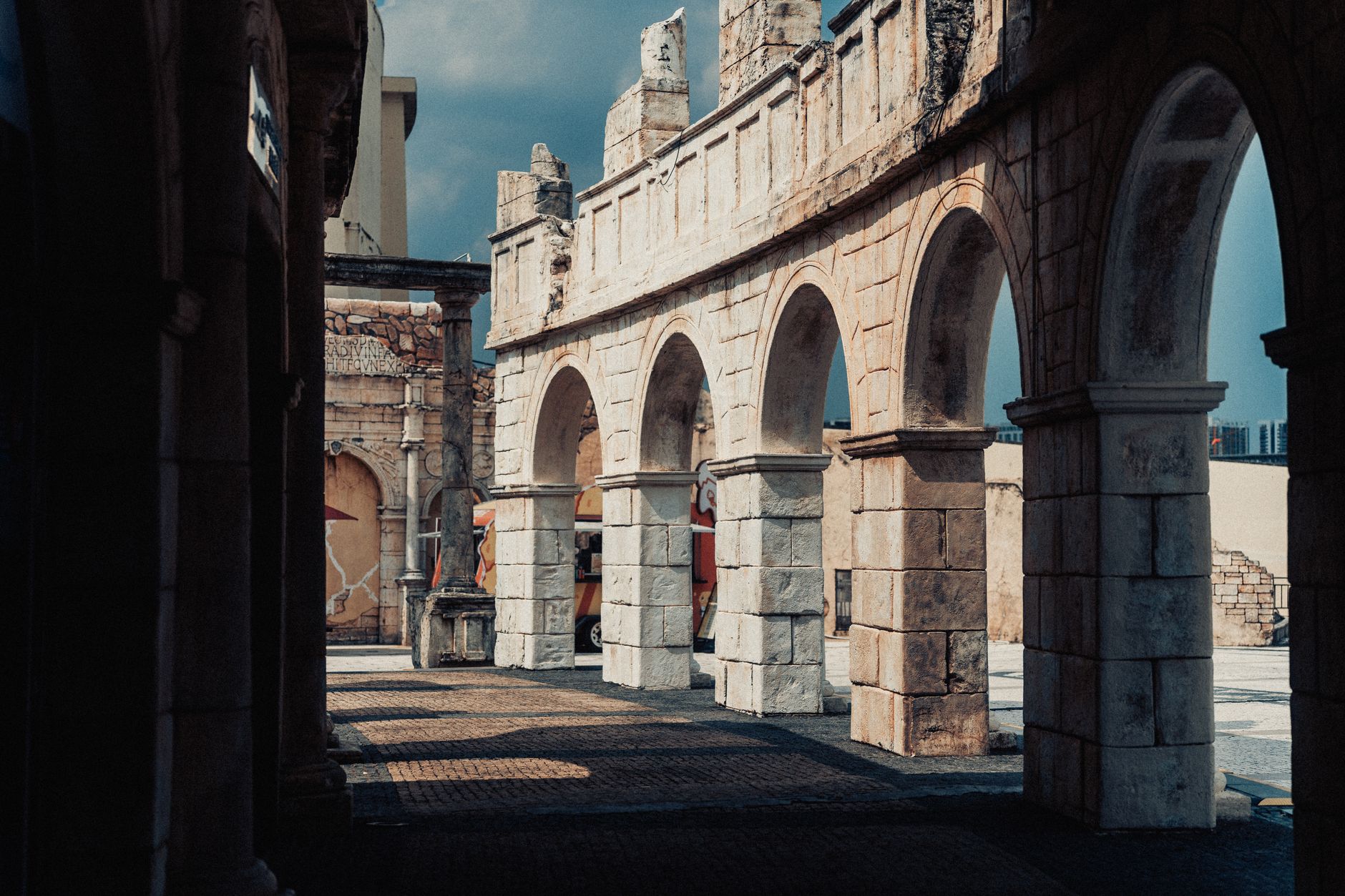
When Rome went to war, a pair of temple doors in the Forum were thrown open. When Rome was at peace, they were shut. Roman writers could count on their fingers the number of times those doors were closed across centuries of history, which tells you how rare peace by Roman reckoning actually was, and how central Janus was to marking that difference.
A god with no Greek equivalent
Janus is one of the clearest cases in Roman religion of a major deity with no real Greek counterpart. He is not identified with any Olympian in ancient sources, and later writers who tried to equate Roman and Greek gods largely left him alone. His two-faced image, looking both forward and backward at once, represents thresholds, beginnings, and transitions in a way that simply does not map onto any single Greek deity's portfolio. This makes Janus a useful corrective to the idea that every major Roman god is secretly a relabeled Greek one.
God of doorways, gates, and beginnings
Janus presided over literal doorways (ianua is the Latin word for door, and shares his name) and over symbolic thresholds: the start of a day, a year, a journey, or an undertaking. Romans invoked him first in prayers, even before Jupiter, because he was understood to control the opening through which any action had to pass. The Salii sang hymns that named Janus as "god of gods," not because he outranked Jupiter in general authority, but because ritual order required addressing the opener of ways before anyone else.
The Temple of Janus Geminus and the doors of war
The Ianus Geminus, a small shrine with double doors in the Roman Forum, is the clearest expression of Janus's link to war and peace. Its doors stood open during war and were ceremonially closed only in times of total peace. Roman tradition, as reported by Livy, credits King Numa Pompilius with building the shrine and says the doors were closed only twice in the centuries between Numa and Augustus: once at the end of the First Punic War and once more under Augustus himself, who made a point of recording that he closed them three times during his reign, a claim repeated in his own Res Gestae as proof of the peace he had brought to Rome.
That the doors had reportedly stood open for most of Rome's recorded history before Augustus says something important about how Romans understood their own past: near-constant low-level warfare was simply the normal state of affairs, and a closed Temple of Janus was treated as rare and newsworthy rather than an expected default.
Checklist: how to recognize Janus in Roman art
- Two faces on a single head, typically shown back-to-back, one looking in each direction.
- Association with coins: early Roman bronze coins (the as) commonly carried a double-faced Janus on one side.
- Appears near gates, doors, or at the start of processions rather than in battle or domestic scenes.
- No weapon or distinguishing animal the way Jupiter has his eagle or Mars his wolf; his iconography is almost entirely the double face itself.
Janus and the Roman calendar
| Element | Connection to Janus |
|---|---|
| Month of January (Ianuarius) | Named for Janus as god of beginnings, marking the year's opening month |
| First prayers of any rite | Janus invoked first, before other gods, as opener of ritual access |
| Temple of Janus Geminus | Doors open in war, closed in rare peace; closures recorded under Numa's successors and Augustus |
| Rex Sacrorum's calendar duties | Monthly sacrifice to Janus marking the new moon, tying him to the start of each month |
Janus compared to other "threshold" ideas in Roman religion
Janus is sometimes grouped loosely with other distinctly Roman concepts that also lack a tidy Greek match, such as the household Lares, who guard a home's boundary rather than the state's, or Terminus, the god of boundary markers who, legend says, refused to be moved even to make way for Jupiter's own temple on the Capitoline. Unlike Terminus, who guards a fixed point, Janus governs passage itself, the moment of crossing rather than the line that is crossed. This distinction matters for understanding Roman religious thought: Romans built specific, separate gods for specific, separate aspects of boundaries and movement, rather than one general "boundary god" covering all of it.
Common mistakes about Janus
A frequent mistake is assuming Janus is simply a minor doorway mascot with little real importance; in fact, his position as the deity invoked first in formal prayer, ahead of Jupiter, signals a structurally central role in Roman ritual, even without an extensive mythology. Another mistake is assuming the Ianus Geminus doors' open-or-closed status was a minor ceremonial detail; Augustus clearly treated the closing of those doors as major enough political capital to list among his life's chief achievements. A third mistake, common because Janus has no Greek equivalent, is trying to force a parallel anyway, usually with Hermes as a vague "god of transitions"; ancient sources do not support this identification, and Janus's lack of a Greek counterpart is itself one of the more telling facts about how distinctly Roman some core religious ideas were, alongside Vesta's civic hearth role.
Why Janus matters for understanding Roman religion
Janus shows that Roman religion was not simply Greek religion with new names attached. Where the Dii Consentes reflect gods with at least a loose Greek parallel, Janus represents an older, native Italic religious logic focused on function, boundary, and ritual order rather than personality and narrative. For more on Rome's own, non-Greek-derived religious categories, see our piece on Lares and Penates, and browse Janus's full entry on the gods and goddesses category page or at his library listing.
Sources
- Ovid, Fasti (Book 1, on Janus and the start of the year) — Main poetic source describing Janus's dual nature and his link to January.
- Livy, Ab Urbe Condita (Book 1, on Numa and the Temple of Janus) — Credits Numa with the shrine and records the rare historical closures of its doors.
- Augustus, Res Gestae Divi Augusti (section on the closing of the Temple of Janus) — Augustus's own record of closing the doors three times as a mark of achieved peace.
Frequently asked questions
Does Janus have a Greek equivalent?
No. Ancient sources do not clearly identify Janus with any Olympian god, and most modern scholars treat him as a distinctly Roman and Italic deity without a close Greek match.
Why were the doors of the Temple of Janus opened during war?
The open doors of the Ianus Geminus symbolized Janus's role governing passage and transition; Roman tradition held the doors open while Rome was actively at war and closed them only in periods of full peace.
Why is Janus invoked before Jupiter in Roman prayers?
Because Janus was understood to control the ritual 'opening' through which any religious act had to pass, Roman prayer formulas customarily named him first, even though Jupiter held greater overall authority.
Why is January named after Janus?
Ianuarius, the Roman month that became January, was named for Janus as the god of beginnings, marking the start of the new year.