
The myths and gods of Rome, with their sources
Roman Myth Library explains the gods, heroes, festivals, and sacred places of ancient Rome on their own terms — with the ancient passage cited behind every claim, not Rome treated as a copy of Greece.
Five ways into Roman religion
Every article and library entry belongs to one of five clusters, so you can go deep on exactly the part of Roman myth you came for.
Gods and Goddesses of Rome
The great Olympian-style state gods, the spirits of the household and fields, and the cults that honored them.
Heroes and Founding Myths
Aeneas, Romulus and Remus, and the legends Rome told about its own beginning.
Festivals, Cults and Religion
The religious calendar, priesthoods, rituals, and the civic life built around them.
Sacred Places and Monuments
Temples, hills, forums, and the places where Roman myths actually happened.
Sources, Greek Parallels and Legacy
The ancient authors, the relationship with Greek myth, and the legacy in names, months, and planets.
Featured articles
Long-form pieces on the gods, founding myths, festivals, and places of Rome — each one sourced, with the ancient passages named.
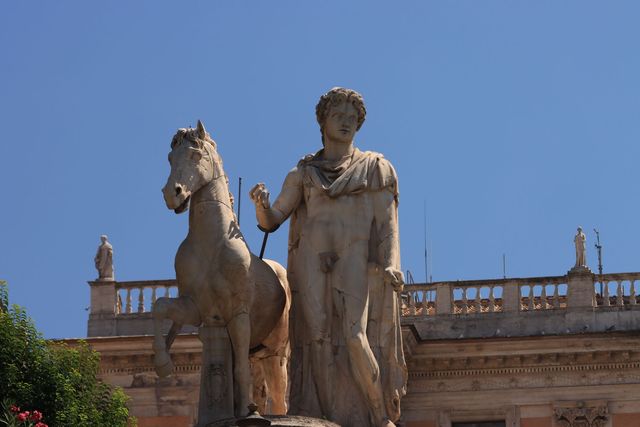
Jupiter: Rome's King of the Gods and Guardian of the State
Jupiter's power in Rome ran through oaths, auspices, and a Capitoline temple, not through the family drama that defines Zeus in Greek myth.
Photo by Efrem Efre via Pexels
Mars: From Field Guardian to God of War
Mars started out guarding farms and herds; by Augustus's reign he was Mars Ultor, avenger of Caesar and father of the Roman people.
Illustrative photo by Bob Jenkin via Pexels
Romulus and Remus: The Twins Who Founded Rome
Raised by a wolf, torn apart by a quarrel over a wall: the legend behind Rome's traditional founding date of 753 BC.
Illustrative photo by Nikita Belokhonov via Pexels
Aeneas: The Trojan Hero Who Became Rome's Ancestor
Before he was Rome's mythic ancestor, Aeneas was a Trojan refugee carrying his father and his household gods out of a burning city.
Illustrative photo by syd.trgt via Pexels
Saturnalia: Rome's Festival of Role Reversal
For one week in late December, Roman social order flipped on purpose — and nobody thought it was a rehearsal for Christmas.
Illustrative photo by AS Photography via Pexels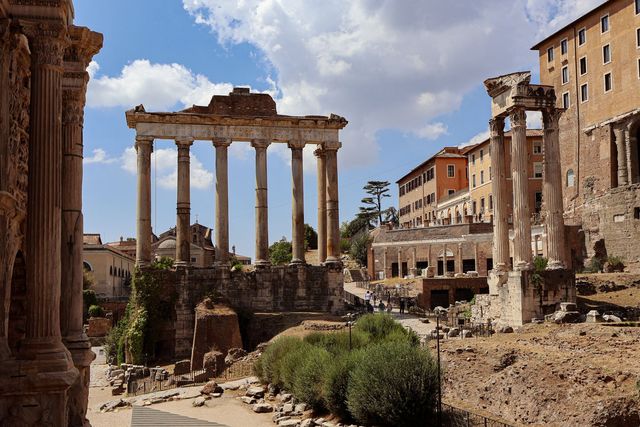
Lupercalia: Rome's Strangest Fertility Festival
Goat sacrifice, a cave on the Palatine, and priests running the streets half-dressed: Lupercalia was unlike any other festival on Rome's calendar.
Illustrative photo by C1 Superstar via Pexels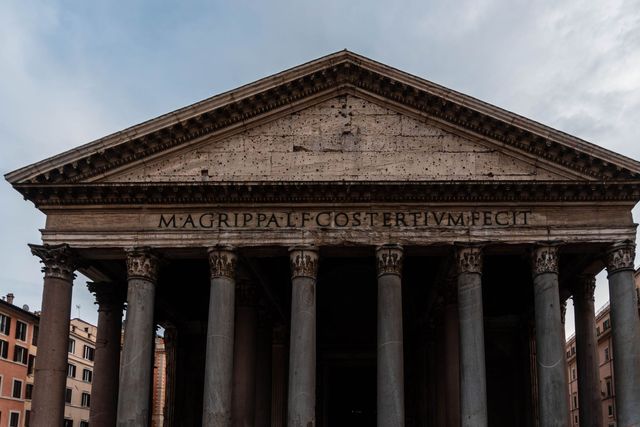
The Pantheon: Rome's Temple to All the Gods
The inscription on the Pantheon credits Agrippa — but the building behind it was constructed nearly 150 years later under Hadrian.
Photo by Alejandro Aznar via Pexels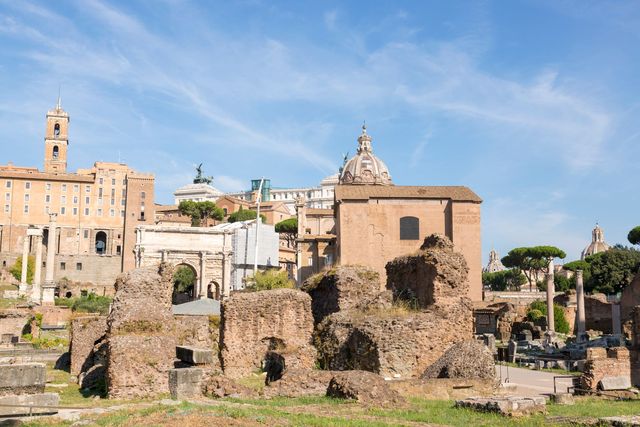
The Roman Forum: The Religious Heart of Rome
Drained from a marsh in the 6th century BC, the Forum packed more temples, shrines, and sacred rituals into one small valley than almost any site in the ancient world.
Photo by Valentin Ivantsov via Pexels
Virgil's Aeneid: Rome's National Epic
Composed over a decade and unfinished at Virgil's death, the Aeneid fused Homeric epic with a distinctly Roman claim about destiny.
Illustrative photo by Maor Attias via PexelsSix essential entries
A starting point if you are new to Roman religion — each one is a full entry in the Library, with ancient sources cited.
Jupiter
Sky, kingship, oaths
Chief of the Roman state gods, guardian of oaths and of Rome itself from his temple on the Capitoline Hill.
Mars
War, and the guardian of farmland
Father of Romulus in Rome's founding legend; a war god who began as a protector of fields and boundaries.
Vesta
The hearth and home
Goddess of the hearth, tended by the Vestal Virgins at a fire that was never allowed to go out.
Ceres
Agriculture and grain
Goddess of the grain harvest, honored at the Cerealia and central to Rome's food supply.
Neptune
The sea
God of the sea and of horses, with an ancient cult that predates heavy Greek influence.
Pluto
The underworld
Ruler of the dead, worshipped obliquely and rarely named directly in Roman cult practice.
Built on cited sources, not retellings
Roman Myth Library is an editorial project, not a fan wiki. Every entry and article names the ancient author and work behind each claim, uses only public-domain translations, and marks where the evidence is late, thin, or shaped by later Greek influence.
Catalogued entries in the Roman Myth Library, each with sources cited.
In-depth articles across five clusters, 900+ words each, fact-checked.
Ancient sources cited by author and passage — Ovid, Virgil, Livy, Plutarch, Varro and others.
Invented quotes or statistics. Uncertainty is marked, not hidden.