
Romulus and Remus: The Twins Who Founded Rome
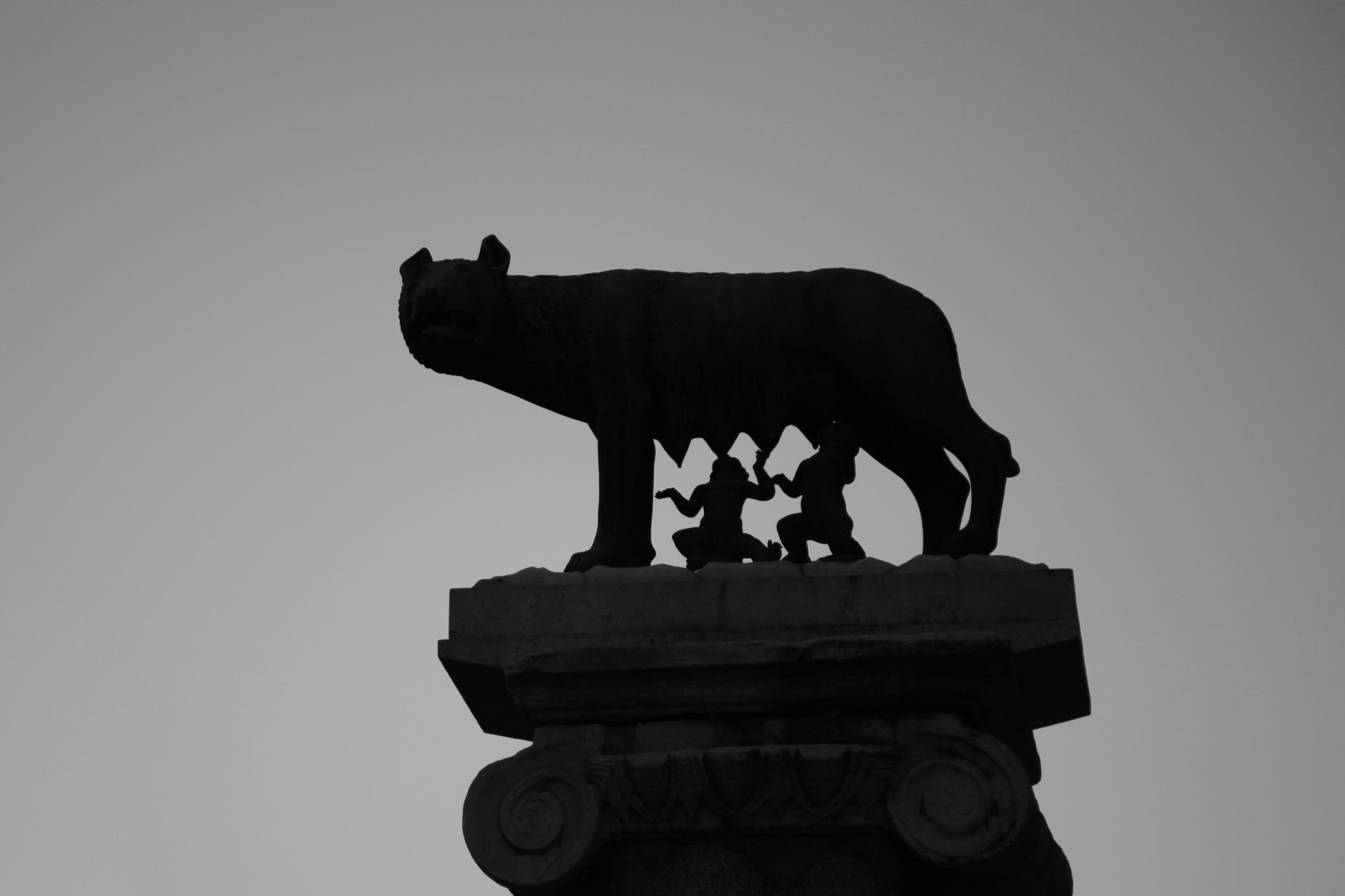
Rome's traditional founding date, 21 April 753 BC, is not drawn from an archive or inscription. It comes directly from a legend about twin brothers raised by a wolf, one of whom killed the other before a single stone of the city was laid.
The Twins' Royal and Divine Parentage
According to tradition, Romulus and Remus were born to Rhea Silvia, a Vestal priestess and daughter of the deposed king Numitor of Alba Longa, and fathered by the god Mars. Their full story, including the family politics that led to their exposure, is told in Rhea Silvia: The Vestal Who Became Mother to Rome's Founders. Numitor's usurping brother Amulius ordered the infants drowned in the Tiber, fearing rivals to his throne.
Abandoned on the Tiber and Raised by a She-Wolf
The servants tasked with drowning the twins left their basket at the river's edge instead, and the flooded Tiber carried them to a spot near the Palatine Hill. There, legend says a she-wolf found and suckled them at a cave later known as the Lupercal, until a shepherd discovered them. The symbolism of this animal, and why Romans kept retelling it, is explored fully in The She-Wolf and the Myth of Rome's Beginning.
Faustulus and Life Among the Shepherds
The royal shepherd Faustulus and his wife Acca Larentia raised the twins as their own, and Romulus and Remus grew up as capable, somewhat lawless young herdsmen on the hills above the Tiber. Their true identity surfaces only when a dispute with rival shepherds brings Remus before Numitor, who recognizes the connection, and the brothers move to overthrow Amulius and restore their grandfather to the throne of Alba Longa.
The Quarrel Over Where to Found the City
With Numitor restored, the twins set out to found a city of their own, but they could not agree on its location or who would rule it: Romulus favored the Palatine Hill, Remus the Aventine. Ancient sources describe them seeking an answer through augury, the practice of reading the will of the gods in the flight of birds. Remus reportedly saw six vultures first, but Romulus saw twelve, and each brother's supporters claimed victory by a different standard, number versus priority.
The Death of Remus and the Founding of Rome
The quarrel turned violent. In Livy's telling, Remus mocked the low wall Romulus had begun building around the Palatine by jumping over it, and Romulus killed him in anger, reportedly saying something like “so perish whoever else shall leap over my walls.” Other versions soften or shift the blame, but the outcome is constant: Romulus alone founds the city, traditionally dated to 21 April 753 BC, and names it after himself.
Romulus as Rome's First King
As Rome's first king, Romulus is credited with establishing the Senate, absorbing neighboring peoples including the Sabines after the famous abduction of their women, and expanding the city's population and territory. Tradition holds that he vanished during a storm or assembly and was deified as the god Quirinus, a figure discussed further in the broader survey of The Seven Kings of Rome and Their Myths.
How the Sources Differ on the Twins' Story
| Element | Livy | Plutarch | Dionysius of Halicarnassus |
|---|---|---|---|
| Cause of Remus's death | Mocking leap over Romulus's wall | Disputed; some accounts say a supporter of Romulus struck him, not Romulus himself | Presents multiple competing accounts without fully endorsing one |
| Augury contest | Brief mention, Romulus sees more birds | More detailed, describes rival claims over priority versus number | Extensive discussion of whether the augury was fairly judged |
| Overall tone | Measured, historicizing | Biographical, interested in character and virtue | Scholarly, aimed at a Greek audience, compares variant traditions |
Checklist: Telling Romulus Apart from Remus in Roman Art
- Most surviving art, including the Capitoline Wolf group and early coins, shows the twins as near-identical infants; individual identification is usually impossible without a label.
- Romulus is the one typically shown later as an adult founder figure, often with a wall, plow, or augur's staff.
- Remus rarely appears alone as an adult in surviving art, since his story ends before the founding.
- If only one twin is being honored or deified in a scene, it is Romulus, later worshipped as the god Quirinus.
Common Mistakes About Romulus and Remus
A frequent error is treating 753 BC as a historically verified date rather than a traditional one, fixed by the later scholar Varro using legendary genealogies, not records. Another is assuming both brothers ruled jointly; in every surviving version, Remus dies before or during the city's founding and never reigns. People also sometimes treat this myth as a literal historical account of Rome's origin, when archaeology actually shows scattered hilltop settlements on the site developing gradually from roughly the 10th century BC, with no evidence of a single founding event. Finally, many assume the she-wolf story was Rome's only founding tradition, when it in fact coexisted and was woven together with the older legend of Aeneas, a connection examined in Aeneas: The Trojan Hero Who Became Rome's Ancestor.
Legend Versus Verified History
Everything above belongs to Roman legend and tradition, not verified history. No contemporary record from the eighth century BC survives describing Romulus, Remus, or a founding ceremony. What Romans themselves treated as sacred civic memory is best understood today as a founding myth that explained existing institutions, rituals, and the city's relationship to Mars and to the earlier Trojan tradition, not as a transcript of events. Modern historians generally approach the whole narrative the way they approach other ancient founding legends: as a window into how a people wanted to be seen, not as a record of what actually happened on any given day in the eighth century BC. For more legendary figures from this same world, see the full heroes and founding myths category.
Sources
- Livy, Ab Urbe Condita (Book 1) — The most widely cited narrative account of the twins' birth, upbringing, and the founding of Rome.
- Plutarch, Life of Romulus (Parallel Lives) — Biographical account noting variant traditions about Remus's death and the augury contest.
- Dionysius of Halicarnassus, Roman Antiquities (Book 1) — Preserves multiple competing versions of the founding story for a Greek readership.
- Ovid, Fasti (Book 4) — Calendar poem referencing Romulus's founding and associated festival traditions.
Frequently asked questions
Is the Romulus and Remus story true?
It is a legend, not verified history. No contemporary eighth-century BC record confirms the twins or the founding event; archaeology shows Rome's site developing gradually rather than through one dramatic founding moment.
Why did Romulus kill Remus?
In Livy's version, Remus mockingly leapt over the low wall Romulus was building around the Palatine, and Romulus killed him in anger. Other ancient sources describe the killing differently or shift the blame.
What animal raised Romulus and Remus?
Legend says a she-wolf found and nursed the abandoned infants at a cave called the Lupercal near the Palatine Hill, before a shepherd named Faustulus discovered them.
What is Rome's traditional founding date?
Roman tradition, as calculated by the scholar Varro, places the founding at 21 April 753 BC. This is a legendary, traditional date, not an archaeologically verified one.
Did Romulus become a god?
Tradition holds that Romulus vanished during a storm or assembly and was subsequently worshipped as the deity Quirinus.