
The She-Wolf and the Myth of Rome's Beginning
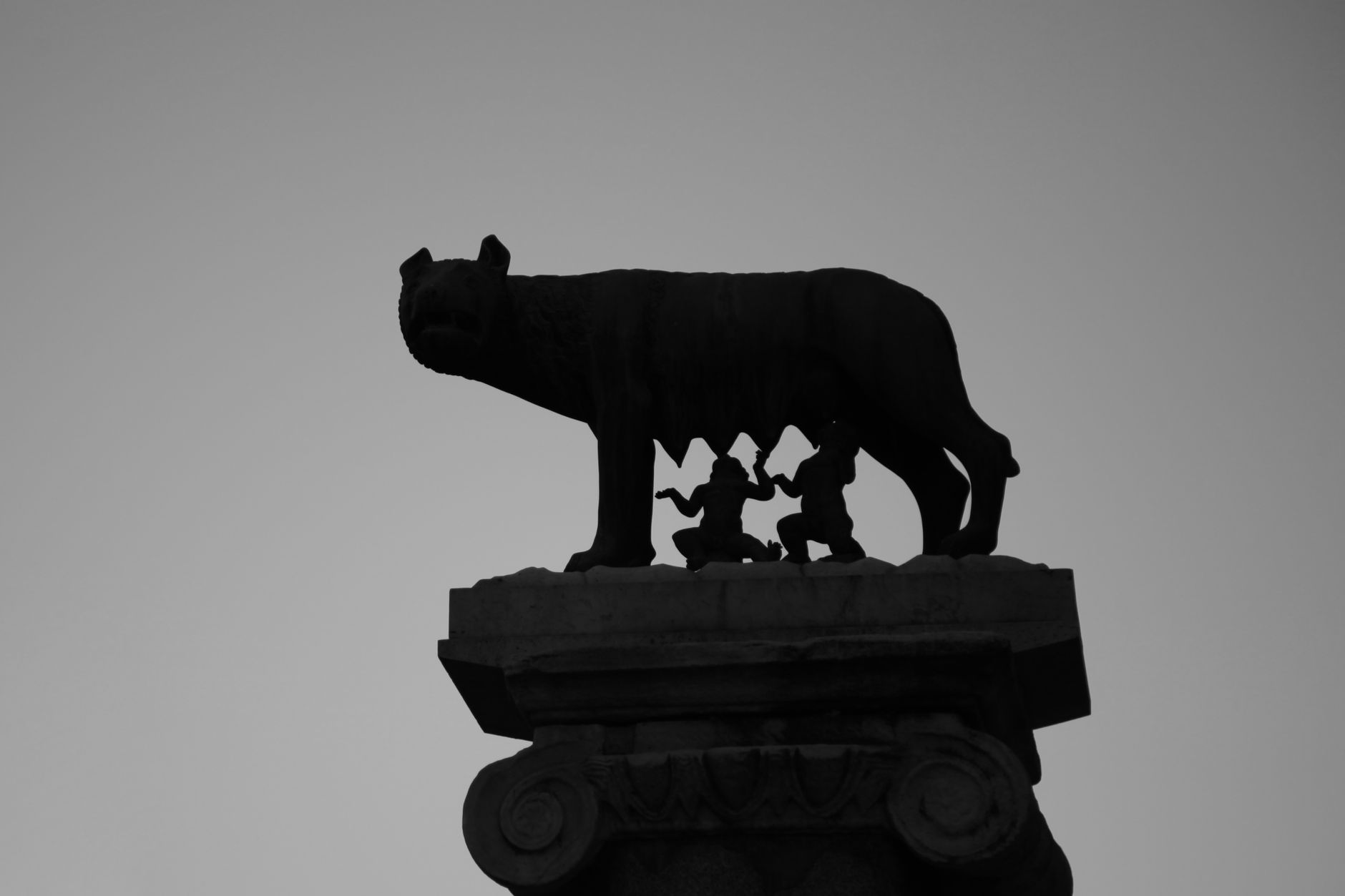
The bronze Capitoline Wolf, the single most recognizable image of Rome's founding, almost certainly did not originally include the twin infants suckling beneath her. Most modern art historians date the twins to the Renaissance, added more than a thousand years after the wolf figure itself was cast, which means the statue most people picture when they think of Romulus and Remus is partly a later addition.
The Core Myth: A Wolf Suckling Two Infants
At the center of Rome's founding legend sits a striking image: infant twins, abandoned on the flooded Tiber and left to die, instead found and nursed by a she-wolf until a shepherd discovers them. This moment, more than any battle or speech, became the single image Romans themselves chose to represent their city's miraculous, divinely favored beginning, central to the fuller story told in Romulus and Remus: The Twins Who Founded Rome.
Why a Wolf? Mars, the Lupercal, and Shepherd Culture
The wolf was not a random choice of animal. It was sacred to Mars, the twins' divine father in the legend, and wolves were a real and present danger to the shepherd communities of early Latium, making the image of a wolf turned nurturing protector a deliberately startling reversal. The cave where the wolf supposedly nursed the twins, the Lupercal, became a real, physically located shrine at the base of the Palatine Hill and the site of the Lupercalia festival, which ritually reenacted fertility and protection themes tied to this same wolf symbolism.
The Capitoline Wolf: Rome's Most Famous Image, and Its Real Age
The Capitoline Wolf, now in the Capitoline Museums, has long been assumed to be an Etruscan bronze from the 5th century BC, which would make it a genuinely ancient artifact contemporary with early Rome. However, metallurgical analysis published in the 2000s dated the casting technique to the medieval period, likely the 11th or 12th century AD, overturning more than a century of assumptions. The twin figures beneath the wolf are separately attributed to the Renaissance sculptor Antonio del Pollaiolo, working around the late 15th century AD. The statue remains a legitimate and important symbol of Rome, just not the ancient original many visitors assume it to be.
The “Lupa” Wordplay: Wolf or Something Else?
Some ancient and modern commentators have noted that the Latin word lupa could also mean “prostitute” in colloquial usage, and have speculated that the original story may have involved a human woman, perhaps Faustulus's own wife Acca Larentia, being described this way before the tale hardened into a literal wolf. Ancient sources themselves preserve the literal animal version as the dominant tradition, alongside awareness of this alternate reading, without fully resolving which came first.
The She-Wolf in Roman Coins, Art, and Public Memory
Long before any specific statue became iconic, the image of the wolf and twins appeared on Roman coinage as early as the Republic, used as a kind of civic shorthand, a visual brand for the city, independent of any one artwork. This made the she-wolf motif a flexible, portable symbol rather than something fixed to a single sculpture, which is part of why later eras felt free to produce new wolf-and-twins statues, including modern replicas gifted to numerous other cities around the world in the 20th century.
Depictions of the She-Wolf Across Media and Periods
| Medium | Approx. date | Notes |
|---|---|---|
| Republican coinage | 4th-3rd century BC | Early portable civic symbol of the wolf and twins |
| Capitoline Wolf, bronze figure | Long assumed 5th century BC; modern analysis suggests 11th-12th century AD | Wolf figure alone, without twins originally |
| Twin infant figures added to Capitoline Wolf | Late 15th century AD | Attributed to Antonio del Pollaiolo |
| Literary accounts, Livy, Ovid, Plutarch | 1st century BC to 1st century AD | Written versions of the full nursing legend |
Does It Matter If the Statue Is Medieval?
For art historians, the revised dating of the Capitoline Wolf matters a great deal; it changes which period's craftsmanship and artistic choices the bronze actually reflects, and it means the twins were never part of the original design at all. For the underlying myth, though, the statue's exact age changes nothing about what Romans themselves believed and transmitted across thirteen or more centuries of coins, literature, and civic ritual at the Lupercal. The she-wolf motif was always bigger than any single artwork, which is part of why a medieval or Renaissance recasting of it could slot in so convincingly as Rome's defining image for so long without anyone noticing the substitution.
Common Mistakes About the She-Wolf Myth
The most widespread mistake is assuming the Capitoline Wolf statue in Rome today is the actual ancient artifact described by Roman writers; modern dating evidence has seriously undermined that assumption for the wolf figure, and the twins are confirmed later additions regardless. Another mistake is treating the she-wolf story as describing a literal biological event; it functions as founding legend and religious symbol, not as a claim modern readers should take as zoologically plausible. People also frequently conflate the Lupercal cave with the Capitoline Hill, when the Lupercal is specifically located at the base of the Palatine, a point covered further in the broader context of The Seven Kings of Rome and Their Myths.
Legend, Symbol, and Modern Scholarship
The she-wolf story is legendary tradition, not verified history, and even its most famous physical embodiment turns out to be a composite object assembled across more than a thousand years of reinterpretation. That layered history, ancient legend, ancient coinage, a possibly medieval bronze, and a Renaissance addition, makes the she-wolf one of the clearest examples in Roman tradition of how a founding symbol keeps being remade by each era that inherits it. For the fuller story of the twins this wolf is said to have saved, see Aeneas: The Trojan Hero Who Became Rome's Ancestor and the wider heroes and founding myths category.
Sources
- Livy, Ab Urbe Condita (Book 1) — Standard narrative source for the she-wolf and the twins' rescue.
- Ovid, Fasti (Book 2) — Poetic treatment of the she-wolf legend tied to festival observance.
- Plutarch, Life of Romulus (Parallel Lives) — Discusses the alternate reading of lupa as a possible human figure.
Frequently asked questions
Is the Capitoline Wolf statue ancient?
The wolf figure was long assumed to be a 5th-century BC Etruscan bronze, but metallurgical analysis published in the 2000s suggested it was cast in the medieval period, around the 11th or 12th century AD. The twin infants beneath it are a separate, confirmed Renaissance addition from the late 15th century AD.
Why is a wolf associated with Rome's founding?
The wolf was sacred to Mars, the legendary father of Romulus and Remus, and wolves were a real presence in the shepherd landscape of early Latium, making the image of a wolf nursing abandoned infants a striking symbolic reversal.
What is the Lupercal?
The Lupercal is the cave at the base of the Palatine Hill where legend says the she-wolf nursed Romulus and Remus. It later became the site of the Lupercalia festival.
Could the she-wolf story originally have been about a human woman?
Some scholars note that the Latin word lupa could colloquially mean prostitute, and suggest the legend may have originally involved a human woman before hardening into the literal wolf story. Ancient sources preserve both readings without fully resolving the question.