
Hercules at Rome: The Ara Maxima and a Greek Hero's Roman Cult
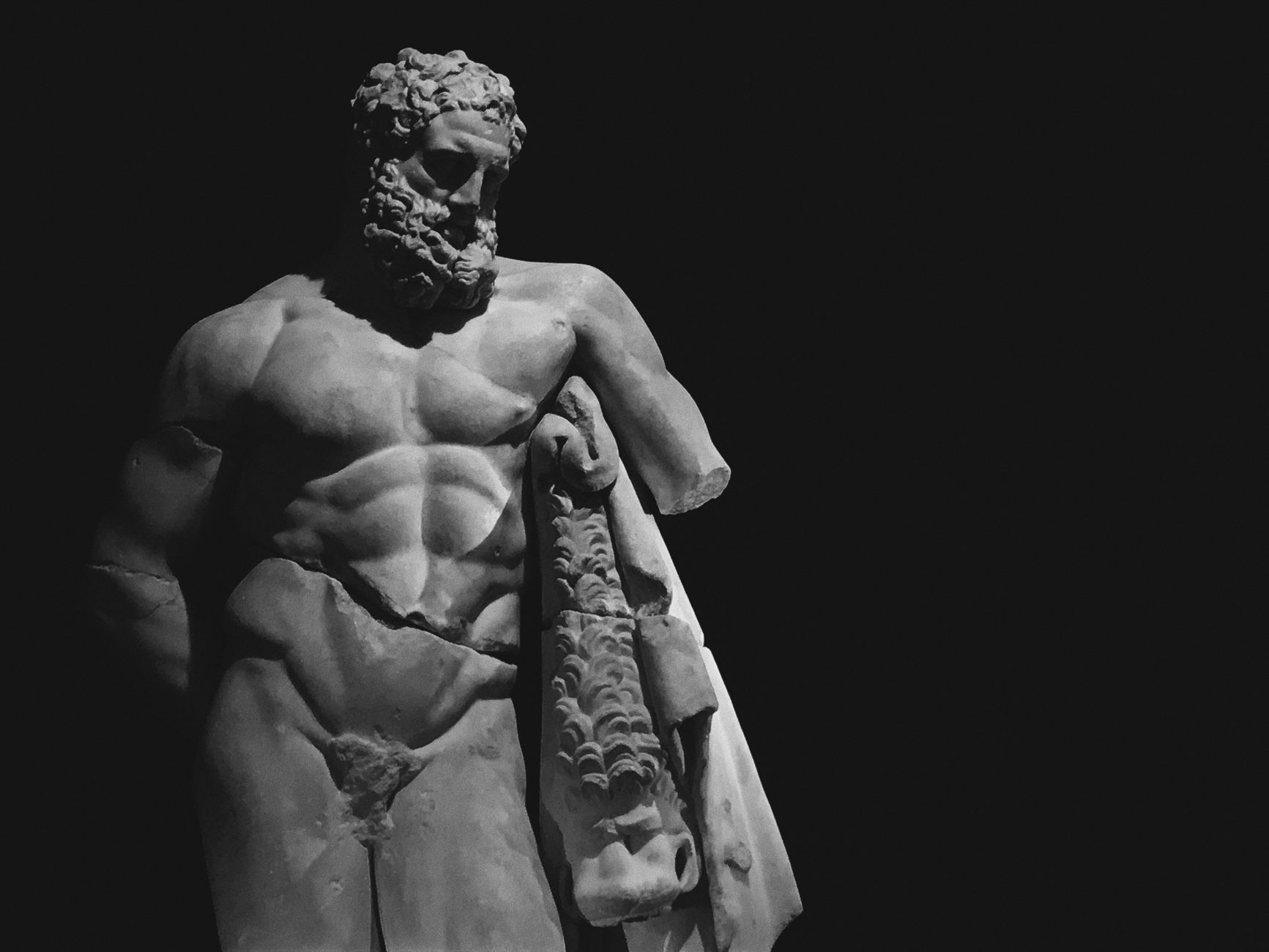
Centuries before the Colosseum or the Pantheon existed, Romans already tended an open-air altar in their cattle market dedicated to a hero who was not originally theirs at all. The Ara Maxima, Rome's great altar to Hercules, marks one of the clearest cases of a Greek figure absorbed wholesale into Roman religious life.
A Greek Hero Imported Into Roman Religion
Hercules is simply the Roman name for the Greek hero Heracles, son of Jupiter and a mortal woman, famous for his twelve labors. Unlike most Roman deities who were given Greek equivalents through interpretatio Romana, matching an existing Roman god to a Greek one by function, Hercules at Rome represents something more direct: an actual imported cult, tied to a specific local legend about his visit to the future site of the city.
The Legend: Hercules, Cacus, and the Cattle of Geryon
According to the version recorded by Livy and expanded by Virgil, Hercules passed through the region while driving the captured cattle of the monster Geryon back from the far west as one of his labors. While resting near the Tiber, some of his cattle were stolen by a local monster or brigand named Cacus, who hid them in a cave. Hercules tracked the cattle down, killed Cacus, and recovered the herd, a feat the local population celebrated as proof of his divine favor.
Evander's Welcome and the Founding of the Ara Maxima
The Greek-born king Evander, already settled at Pallanteum on the future Palatine Hill, welcomed Hercules and, recognizing his divinity, established the Ara Maxima in his honor on the spot, according to Virgil's account, where Evander retells the story to the newly arrived Aeneas himself. This scene, set generations before Rome's actual legendary founding, lets Virgil root Roman religious practice in an even older layer of myth than Romulus and Remus.
Cult Practice at the Ara Maxima: Rules and Rituals
The historical cult of Hercules at the Ara Maxima, located in the Forum Boarium, Rome's cattle market near the Tiber, had genuinely distinctive rules: sacrifices there reportedly excluded women from certain rites and required that nothing from the sacrificed animal be taken off-site, with any leftovers burned rather than carried away. These unusual restrictions, noted by multiple ancient sources, suggest the cult preserved genuinely old, non-standard ritual practices distinct from Rome's mainstream state religion.
Hercules' Place Among Rome's Gods: God or Hero?
Hercules occupied an unusual middle category in Roman religious thought: a mortal-born figure who achieved divine status through his labors and eventual apotheosis, worshipped with real cult honors but without quite the same standing as the major gods like Jupiter or Mars. This ambiguous status, a hero who becomes a god through effort and suffering rather than birth, made Hercules a popular model for later Roman generals and even emperors seeking to associate themselves with earned, rather than simply inherited, greatness.
Roman Cult of Hercules vs Greek Cult of Heracles
| Feature | Greek Heracles | Roman Hercules at the Ara Maxima |
|---|---|---|
| Core myth | Twelve labors across the Greek world | Local legend of Cacus and Geryon's cattle, tied to Rome's own site |
| Main cult site | Various sites across Greece, such as Thebes | Ara Maxima, Forum Boarium, Rome |
| Ritual rules | Varied by region | Distinctive local restrictions, including the reported exclusion of women from some rites |
| Civic role | Pan-Hellenic hero and occasional city patron | Patron of Roman merchants, generals claiming his favor, and the cattle trade |
Checklist: Signs You're Looking at Roman Hercules, Not Generic Heracles Imagery
- Associated specifically with the Forum Boarium or an altar rather than a Greek sanctuary.
- Paired narratively with Cacus and stolen cattle rather than the twelve labors generally.
- Connected to Evander and Pallanteum in literary sources, placing the story before Rome's founding.
- Honored by Roman generals or triumphal dedications, a common later practice, rather than shown purely in a Greek athletic or heroic context.
The Potitii and Pinarii: Rome's Original Cult Keepers
Ancient tradition names two Roman families, the Potitii and the Pinarii, as the original hereditary custodians of the Ara Maxima's rites, said to have been personally instructed by Hercules himself in how the sacrifice should be performed. A famous, grimmer coda to the legend holds that the Potitii, after transferring their sacred knowledge to state-owned slaves around 312 BC, supposedly died out entirely within a year, a story later Roman writers treated as a warning about tampering with inherited religious duties. Whether or not that detail reflects any real event, it shows how seriously Romans treated the idea that this particular cult had an unbroken, almost contractual chain of custody stretching back to a hero's own instructions. The episode also illustrates a broader pattern in Roman religion, where sacred duties were understood as inherited family property that could, in principle, be transferred, abandoned, or lost, in sharp contrast to the Greek model Hercules's own cult originally came from.
Common Mistakes About Hercules at Rome
A common mistake is assuming Hercules was simply invented by Romans as their own hero; he is a direct import of the Greek Heracles, name and labors intact, not a native Roman creation like Romulus. Another mistake is assuming the Ara Maxima legend and the later founding legends of Romulus and Remus are competing accounts; ancient authors nested them together, with Hercules's visit treated as predating Rome's actual founding by generations. People also sometimes assume Hercules ranked among Rome's major state gods; he did not, occupying instead the distinct category of a deified hero.
Legend and Verified Local Cult
The story of Hercules and Cacus is legend, with no historical verification, but the cult practice at the Ara Maxima itself is historically well attested through Roman religious writers describing rites still being performed in their own lifetimes, centuries after the supposed events. That combination, a mythic origin story wrapped around a genuinely documented local cult, is common across Rome's founding traditions, several of which are explored in the heroes and founding myths category.
Sources
- Livy, Ab Urbe Condita (Book 1) — Records the Hercules and Cacus legend and the founding of the Ara Maxima.
- Virgil, Aeneid (Book 8) — Evander narrates the Hercules and Cacus story to Aeneas at length.
- Dionysius of Halicarnassus, Roman Antiquities (Book 1) — Additional detail on the cult's foundation and its unusual ritual rules.
- Ovid, Fasti (Book 1) — References the Ara Maxima's distinctive ritual restrictions.
Frequently asked questions
Why does Rome have a cult of the Greek hero Hercules?
Legend holds that Hercules passed through the future site of Rome while driving stolen cattle, killed the brigand Cacus there, and was honored by the local king Evander with the Ara Maxima, an altar that developed into a lasting Roman cult.
What is the Ara Maxima?
The Ara Maxima, the Greatest Altar, was Rome's chief altar to Hercules, located in the Forum Boarium cattle market near the Tiber, with distinctive ritual rules attested by multiple ancient writers.
Who was Cacus?
Cacus was a monster or brigand in Roman legend who stole some of Hercules's cattle near the future site of Rome and was killed by Hercules in retaliation.
Was Hercules considered a god in Rome?
Hercules held an unusual middle status: a mortal-born hero who achieved divine honors through his labors and apotheosis, worshipped with real cult practice but distinct from Rome's major state gods.