
Jupiter: Rome's King of the Gods and Guardian of the State
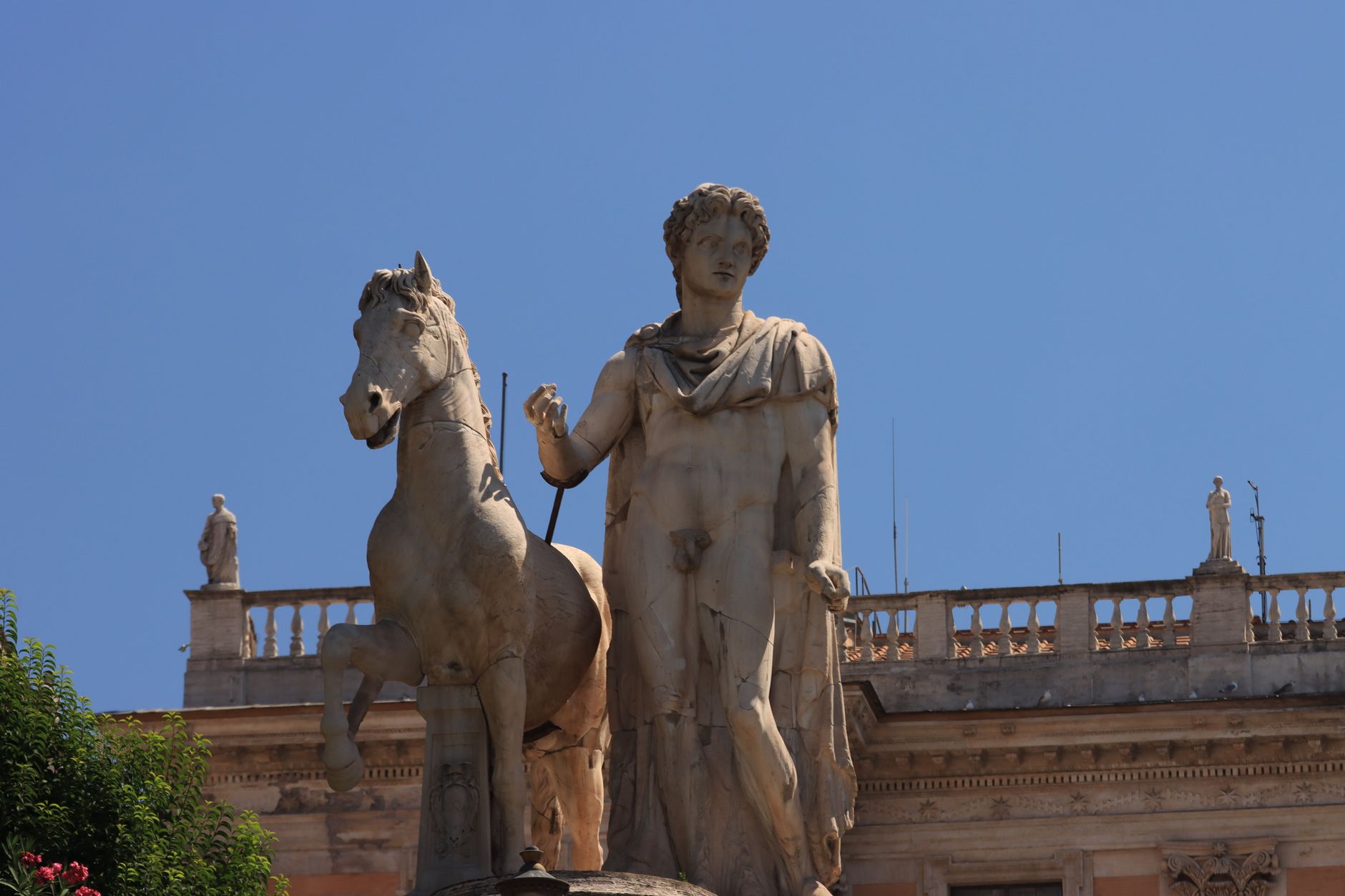
In 509 BCE, by Rome's own traditional reckoning, the Temple of Jupiter Optimus Maximus was dedicated on the Capitoline Hill, the same year Rome expelled its last king. That timing was not an accident: Jupiter's authority and the authority of the new Republic were bound together from the start, and understanding Jupiter means understanding how a sky god became the guarantor of Roman political life.
A god defined by a title, not a story
Unlike Zeus, whose Greek mythology is dense with affairs, battles, and family drama, Jupiter in Roman religion is defined mostly by epithets describing what he does: Optimus Maximus ("Best and Greatest"), Stator ("the one who halts retreat"), Feretrius (linked to the ritual of spolia opima, arms taken from an enemy commander in single combat), and Capitolinus (tied to his great temple). Each title marks a specific cult function rather than a chapter in a biography. Roman religion cared less about Jupiter's personality and far more about which Jupiter you needed to address for a given purpose.
The Capitoline Triad
Jupiter shared his great temple with Juno and Minerva, forming the Capitoline Triad. This arrangement, three deities sharing one temple with separate chambers (cellae), is distinctly Roman in its civic architecture, even though all three names have Greek equivalents. The Capitoline Triad functioned as a statement about the Roman state itself: sky authority, protection of women and the city, and craft or strategic wisdom, housed together at Rome's highest point. The original temple burned in 83 BCE during civil unrest and was rebuilt more than once; the version Romans worshipped at under the early emperors was already the third incarnation of the building.
Jupiter and the taking of auspices
Jupiter's clearest day-to-day role in Roman public life was through augury, the practice of reading his will in the flight of birds, before nearly every major state action: elections, military campaigns, the convening of the Senate. Magistrates holding imperium were required to "take the auspices" (auspicia) before acting, and a bad reading could delay or cancel public business entirely. This was not superstition layered on top of politics; it was built into the Roman constitution. A consul who ignored unfavorable auspices was understood to have acted against Jupiter's will, with real political consequences, as Livy's history repeatedly shows in moments of military disaster blamed on neglected ritual.
Jupiter vs. Zeus: function, not just name
| Aspect | Jupiter (Roman) | Zeus (Greek) |
|---|---|---|
| Primary role | Guarantor of oaths, treaties, and the Roman state's legitimacy | Head of a large mythological family with an extensive narrative life |
| Main cult site | Temple of Jupiter Optimus Maximus, Capitoline Hill, dedicated 509 BCE | Temple of Zeus, Olympia, among many regional sanctuaries |
| Key practice tied to him | Augury and the taking of auspices before state action | Oracle consultation (notably Dodona), festival games at Olympia |
| Personality in myth | Minimal; defined by epithet and function | Extensively developed in epic and tragedy |
Checklist: how to recognize Jupiter in Roman art and inscriptions
- An eagle at his side or in flight nearby, his recognized bird and battlefield standard-animal for Rome's legions.
- A thunderbolt (fulmen) held or about to be thrown.
- Inscriptions reading "IOM," an abbreviation for Iuppiter Optimus Maximus, extremely common on altars across the empire.
- A seated, mature, bearded figure rather than a youthful one, often enthroned.
- Pairing with Juno and Minerva in triple-chamber temple remains signals the Capitoline Triad specifically.
Ludi Romani and Jupiter's festival calendar
The Ludi Romani, Rome's oldest annual games, were held in Jupiter's honor each September and traditionally credited to the elder Tarquin kings, long before the Republic. A banquet for Jupiter, the epulum Iovis, and other rites tied the political calendar directly to his worship; magistrates taking up office often did so with a vow or sacrifice directed at Jupiter Optimus Maximus on the Capitoline. This is one more sign that Jupiter's cult was woven into the machinery of Roman government rather than kept separate from it, unlike, say, the more private household worship described in our piece on Lares and Penates.
Common mistakes about Jupiter
People often assume Jupiter is "just the Roman Zeus" because of the shared sky-god role and the king-of-the-gods label, but this flattens real differences in cult practice. Zeus is barely involved in formal Greek state ritual compared to how saturated Roman public life was with Jupiter-centered procedure; Roman magistrates could not legally convene certain assemblies without first checking Jupiter's auspices, a constitutional role with no close Greek analogue. Another common error is picturing Jupiter primarily through mythological stories, such as his conflicts in Greek myth; Roman sources focus far more on his cult titles, his temple history, and his role underwriting oaths and treaties than on any narrative biography. A third mistake is treating "Capitoline Triad" as timeless and original to Rome's founding; the triple cult as we know it reflects Etruscan-influenced temple design from the late regal period, not Rome's very earliest religious practice, which likely centered on a simpler worship of Jupiter alone or with Mars and Quirinus in an older triad structure mentioned by Roman antiquarians.
Jupiter among the twelve
Jupiter headed the Dii Consentes, Rome's council of twelve major gods, and his pairing with Juno sat at the top of that list as recorded by Ennius. But his authority extended well past that council: treaties with foreign states were sworn in his name, and the fetial priests who declared war did so invoking Jupiter as witness. For more on how Jupiter's fellow sky-adjacent and war-adjacent gods operated, see our articles on Mars and Janus, and browse the full roster on the gods and goddesses category page.
Sources
- Livy, Ab Urbe Condita (Book 1, on the Capitoline temple's foundation) — Credits the temple's vow to the elder Tarquin kings and its dedication to the first year of the Republic.
- Cicero, De Natura Deorum (general) — Discusses Jupiter's standing among the Roman state gods and Roman religious reasoning about the gods.
- Pliny the Elder, Natural History (Book 2 and Book 35) — References to Jupiter's cult titles and temple art.
Frequently asked questions
When was the Temple of Jupiter Optimus Maximus built?
Roman tradition dates its dedication to 509 BCE, the first year of the Republic. The building was later destroyed by fire and rebuilt more than once under the Republic and Empire.
What does 'Optimus Maximus' mean?
It translates to 'Best and Greatest,' an epithet marking Jupiter's supreme rank among Roman state gods rather than describing a specific myth or story about him.
Is Jupiter the same as Zeus?
They share a sky-god role and a loose family resemblance through Roman identification of the two, but their cult functions differ significantly: Jupiter's worship was tightly bound to Roman state procedure, auspices, and oath-taking in a way Zeus's worship in Greece was not.
What animal and symbol represent Jupiter?
The eagle and the thunderbolt (fulmen) are his standard attributes in Roman art, and the eagle also served as the emblem of the Roman legions.