
The Twelve Dii Consentes: Rome's Council of Gods Explained
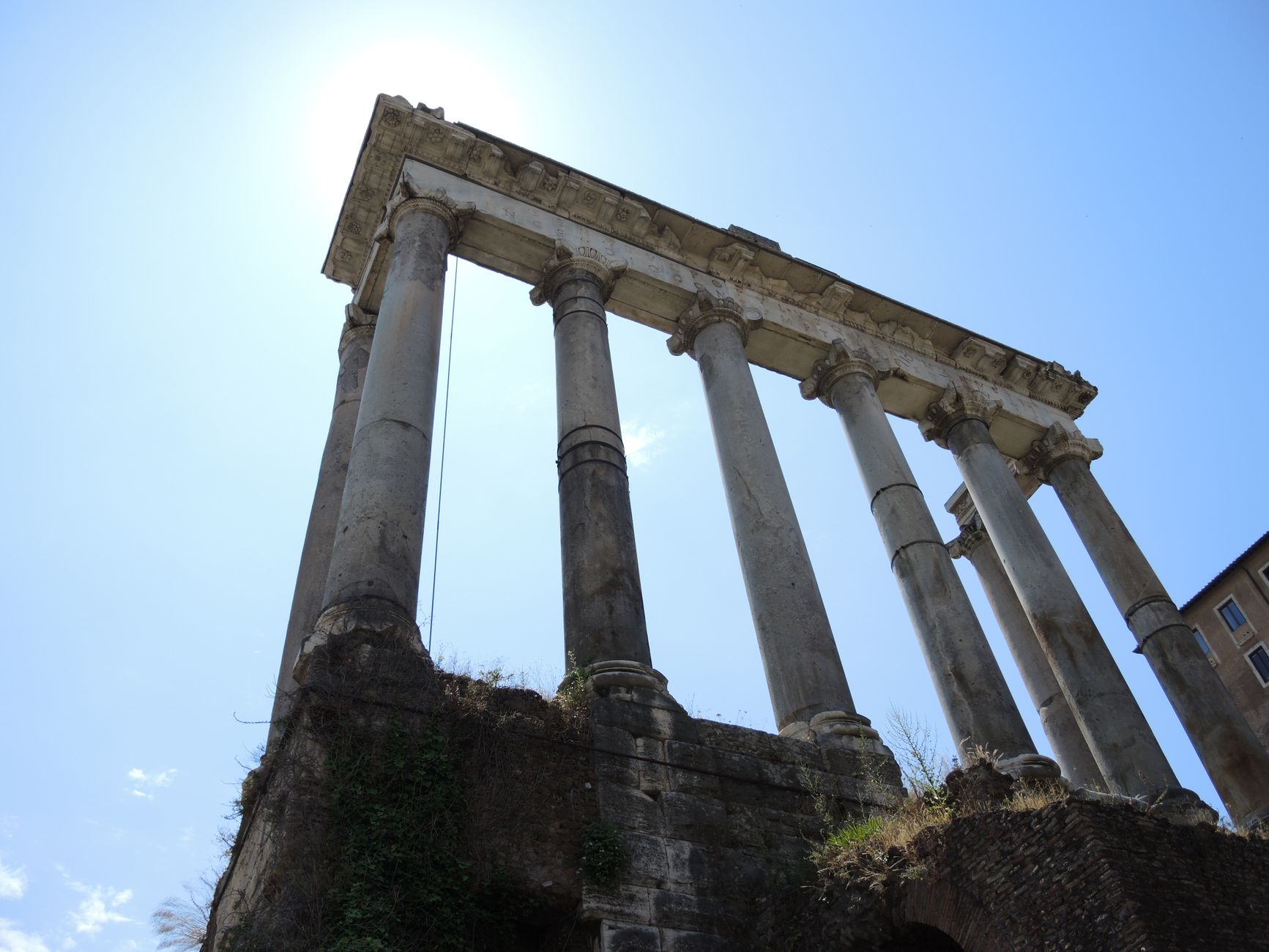
On the slope of the Capitoline Hill, Roman writers tell us, stood a row of twelve gilded statues, six gods and six goddesses, standing together as a council. Romans called them the Dii Consentes, and getting this group right matters because it is easy to flatten them into "the Roman Olympians" and stop thinking about them at all.
What "Dii Consentes" actually means
The name is usually translated as "the gods who are in agreement" or "the gods who act together," from the Latin consentire. The clearest ancient reference comes from the poet Ennius, whose list of six male-female pairs was later quoted by the antiquarian Varro: Jupiter and Juno, Neptune and Minerva, Mars and Venus, Apollo and Diana, Vulcan and Vesta, Mercury and Ceres. The arrangement into paired gods and goddesses is itself a Roman habit, reflecting the Roman religious instinct for order, pairing, and balance rather than a direct copy of any single Greek source.
The gilded statues in the Forum
Pliny the Elder mentions gilded images of the twelve standing in the Roman Forum area, likely near the later Portico of the Dii Consentes at the foot of the Capitoline, a structure whose surviving columns still mark the spot today. That portico, as rebuilt in the fourth century CE under the prefect Vettius Agorius Praetextatus, is one of the latest pagan restorations recorded in the city, a reminder that this group still mattered to Romans centuries after Ennius wrote.
Not a copy of the Twelve Olympians
It is tempting to call the Dii Consentes "the Roman Twelve Olympians," but that framing gets the relationship backward. Roman religion did not import a Greek pantheon wholesale; it had its own old gods of field, hearth, and state long before heavy Greek literary influence, and then organized twelve of the most prominent into a council using a Roman structural idea, the paired list. Several of the twelve, including Mars and Vesta, functioned very differently in Roman cult than their rough Greek counterparts did in Greek cult, even where later writers equated the names. Mars, for instance, began as a protector of farmland and only later became the war god Romans are now best known for; Vesta had no mythological biography worth telling at all, because her importance lay entirely in an ongoing civic duty, keeping Rome's fire alight, not in stories about her life.
This difference in emphasis is itself instructive. Greek myth treats its twelve as characters who marry, quarrel, and intervene in epic plots. Roman religion treated its twelve mainly as recipients of correct ritual: specific sacrifices, specific priesthoods, specific days on the calendar. A Roman farmer or magistrate cared less about whether Jupiter and Juno had a happy marriage in some story and far more about whether the correct formula was spoken when a temple was dedicated or a treaty sworn.
The twelve, function by function
| Roman deity | Paired with | Core Roman function | Rough Greek parallel |
|---|---|---|---|
| Jupiter | Juno | Sky, oaths, the Roman state itself | Zeus |
| Juno | Jupiter | Marriage, the life-cycle of women, civic protection | Hera |
| Neptune | Minerva | Fresh water and, later, the sea | Poseidon |
| Minerva | Neptune | Craft, strategy, guilds | Athena |
| Mars | Venus | Protection of fields and the army | Ares |
| Venus | Mars | Growth, charm, later imperial ancestry | Aphrodite |
| Apollo | Diana | Healing, prophecy, poetry | Apollo |
| Diana | Apollo | Wild places, childbirth | Artemis |
| Vulcan | Vesta | Destructive and useful fire, metalwork | Hephaestus |
| Vesta | Vulcan | The hearth fire of the Roman state | Hestia |
| Mercury | Ceres | Trade, travel, messages | Hermes |
| Ceres | Mercury | Grain and the growth of crops | Demeter |
Checklist: how to recognize a Dii Consentes scene
- Twelve figures shown together, usually in male-female pairs, not as a loose crowd.
- Jupiter and Juno are normally placed at the center or head of the group.
- The group excludes major deities such as Janus, Pluto, and Terminus, who were powerful in Roman religion but not part of this specific council.
- If the source is Ennius or Varro by name, you are reading the actual ancient list, not a modern reconstruction.
Common mistakes about the Dii Consentes
The biggest mistake is assuming this council is simply "the twelve Olympians with Latin names." It is not. The Olympian council in Greek myth is a narrative group bound by genealogy and the stories of the Trojan War and its aftermath; the Dii Consentes is primarily a cult and civic list, tied to a specific set of statues and a specific religious vocabulary about state agreement. A second mistake is assuming the membership was fixed from Rome's earliest days. The pairing we know through Ennius reflects a later, more literary stage of Roman religion, after contact with Greek cult practice had already shaped how Romans organized and described their own gods, a process scholars call interpretatio Romana. The twelve did not replace older, functionally vital gods like the household Lares or Terminus, who had no seat on this council but remained central to daily Roman religious life.
Why the council mattered to the Roman state
Public ritual, especially the supplicatio, a formal rite of collective prayer during a crisis, could be addressed to this group as a unit rather than to twelve separate deities one by one. That made the Dii Consentes useful as political and religious shorthand: addressing "the gods who agree" reinforced the idea that Rome's state religion itself depended on divine consensus, not on any single deity's favor. Members of this council, especially Jupiter, Mars, Venus, and Minerva, each carried enough independent cult weight to anchor major temples and festivals of their own, which is why each deserves individual treatment beyond this group article. For the full roster of Rome's cataloged deities, see the gods and goddesses category page.
Sources
- Varro, fragments preserving Ennius's verse list (as quoted in later antiquarian tradition) — Preserves the paired roster of the twelve.
- Pliny the Elder, Natural History (Book 35) — Describes gilded statues of the group near the Forum.
- Cicero, De Natura Deorum (general discussion of the major state gods) — Reflects elite Roman thinking about organized groups of gods.
Frequently asked questions
Who are the twelve Dii Consentes?
Per Ennius's list, preserved by Varro, they are six paired gods and goddesses: Jupiter and Juno, Neptune and Minerva, Mars and Venus, Apollo and Diana, Vulcan and Vesta, and Mercury and Ceres.
Are the Dii Consentes the same as the Twelve Olympians?
No. They overlap in roster but not in origin or function. The Dii Consentes is a Roman cult and civic grouping tied to gilded statues and formal state prayer, while the Olympians are a Greek mythological family defined by genealogy and narrative.
Where did the statues of the Dii Consentes stand?
Ancient sources place gilded images of the twelve near the Roman Forum at the foot of the Capitoline Hill, in the area later marked by the Portico of the Dii Consentes, whose columns still stand today.
Why aren't Janus or the Lares part of the Dii Consentes?
The council was a specific, named list of twelve; other deities central to Roman life, such as Janus and the household Lares, held enormous religious importance but simply were not counted among this particular group.