
Venus in Roman Religion: From Garden Goddess to Mother of Rome
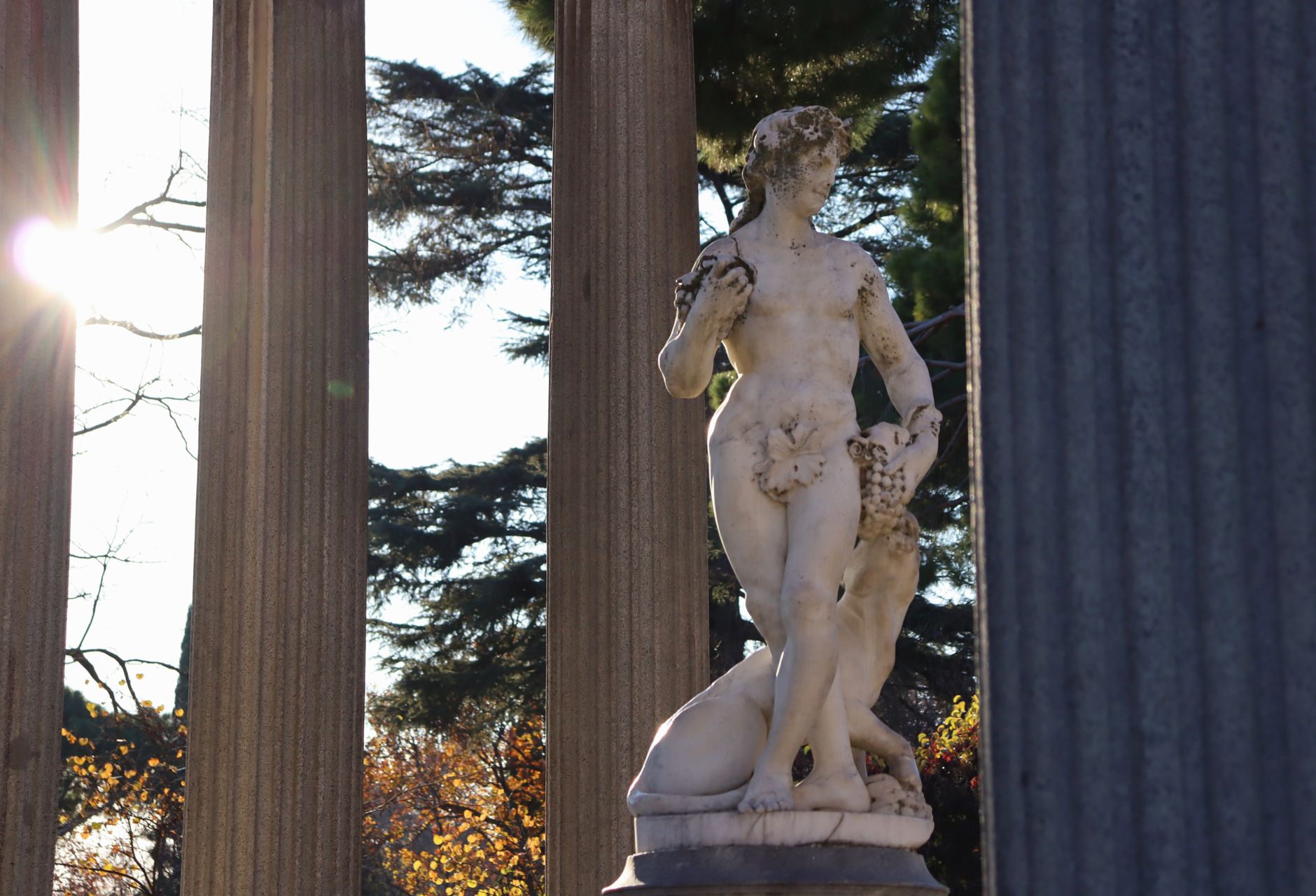
Julius Caesar built Venus a temple in his own new Forum in 46 BCE, and he did not do it because he loved beauty. He did it because he claimed Venus as his family's literal ancestor, through Aeneas, and a temple to Venus Genetrix, "Venus the Begetter," was a political statement about bloodline and legitimacy as much as a religious offering.
An obscure start
Venus's earliest attested Roman worship looks nothing like the powerful imperial-ancestor goddess she later became. Her early cult title Venus Obsequens ("the indulgent" or "the gracious") is tied to a modest temple vowed around 295 BCE, reportedly funded by fines collected from women convicted of adultery, according to Roman tradition, a strange and specific origin for a goddess who would later be central to state ideology. Venus also had an early association with gardens and cultivated growth, a much humbler portfolio than the cosmic force of desire she becomes in later Roman poetry.
Lucretius's Venus: a philosophical turn
The poet Lucretius opens his philosophical epic On the Nature of Things with a famous invocation of Venus as a generative force driving all living things to reproduce and thrive, a strikingly abstract, almost physics-like role far removed from a simple love-goddess. This shows Venus's Roman meaning was flexible enough to support serious philosophical use, not just romantic or domestic association, well before Julius Caesar's political use of her cult.
Lucretius was writing within an Epicurean philosophical framework that treated the traditional gods as largely uninvolved in daily human affairs, so even his invocation of Venus functions partly as poetic convention, a way of personifying the natural drive toward growth and reproduction rather than a sincere prayer expecting a literal divine response. That a Roman poet could use Venus this way, as a flexible symbol rather than a fixed mythological character, says something about how Roman religious imagery could be repurposed for very different kinds of intellectual work.
Venus Genetrix and the Julian claim
Roman legend held that Aeneas, the Trojan refugee ancestor of the Roman people, was Venus's own son by the mortal Anchises. Julius Caesar's family, the Julians, claimed descent from Aeneas's son Iulus, which meant claiming Venus herself as a direct divine ancestor. Caesar's Temple of Venus Genetrix, vowed before the battle of Pharsalus and dedicated in 46 BCE in his new Forum Iulium, made this ancestral claim into permanent civic architecture. Augustus, Caesar's heir, continued leaning on this connection, and Venus's political utility to the Julio-Claudian dynasty remained strong for decades after Caesar's death. Before Caesar, an earlier imported cult, Venus Erycina, had already given Venus a foothold in Roman state religion with less personal political baggage: her temple on the Capitoline, vowed in 217 BCE during the darkest days of the war against Hannibal, brought a Sicilian cult of Venus associated with Mount Eryx into the city as part of a broader Roman habit of importing foreign cults during moments of military crisis.
Venus vs. Aphrodite: function, not just name
| Aspect | Venus (Roman) | Aphrodite (Greek) |
|---|---|---|
| Political role | Claimed as literal ancestor of the Julian family and, by extension, Rome's imperial line | No equivalent dynastic political claim in Greek city-states |
| Early character | Modest garden and growth goddess, later a philosophical generative force in Lucretius | Established early as a major goddess of desire and beauty in epic and cult |
| Key Roman cult title | Venus Genetrix ("the Begetter"), Venus Obsequens, Venus Erycina | Various epithets, but without the genealogical "begetter of my family" framing |
| Famous temple | Temple of Venus Genetrix, Forum of Caesar, dedicated 46 BCE | Temple of Aphrodite at Paphos and other major Greek sanctuaries |
Checklist: how to recognize which Venus you're looking at
- If paired with Mars in art or myth, you're likely seeing the war-and-love pairing drawn from the Dii Consentes list, or later imperial symbolism linking the two ancestral gods of the Julian line.
- "Venus Genetrix" in an inscription or temple name signals the ancestral, dynastic Venus tied to Julius Caesar.
- "Venus Erycina" points to a cult imported from Sicily around 217 BCE during the Second Punic War, with a different ritual history from the native Roman garden Venus.
- A context involving Lucretius or philosophical poetry signals the abstract, generative-force Venus rather than the political or romantic one.
Common mistakes about Venus
A common mistake is assuming Venus was always primarily a goddess of romantic love and beauty in Rome, mirroring Aphrodite's popular image; in Roman public religion her most politically significant role was as divine ancestor of the Julian family and, by extension, of Rome's founding line through Aeneas, a function with no equivalent emphasis in Aphrodite's Greek cult. Another mistake is assuming "Venus" meant one consistent thing across Roman history; the obscure early Venus Obsequens, the imported Sicilian Venus Erycina, the philosophical generative Venus of Lucretius, and the dynastic Venus Genetrix of Caesar's Forum are meaningfully different religious and political uses of a single name. A third mistake is assuming her connection to Mars was always romantic in a simple sense; in imperial ideology their pairing carried weighty dynastic symbolism linking war and ancestry for Rome's ruling family, beyond any love story.
Venus among Rome's major cults
Venus held a seat among the Dii Consentes, paired with Mars in Ennius's roster, and her cult expanded dramatically in political importance once Rome's late Republican elite began actively using mythological ancestry as a tool of legitimacy. For more on how Rome handled gods claimed as ancestors of its ruling families, see our articles on Mars and the Dii Consentes, and browse Venus's full entry on the gods and goddesses category page or at her library listing.
Sources
- Lucretius, De Rerum Natura (opening invocation, Book 1) — Presents Venus as an abstract generative force in nature, a major philosophical use of her cult.
- Virgil, Aeneid (general, on Venus as Aeneas's mother) — Establishes Venus's genealogical link to Aeneas and the Roman founding line.
- Suetonius, Life of Julius Caesar (on Caesar's Forum and Venus Genetrix) — Records Caesar's temple and his claimed descent from Venus.
Frequently asked questions
Why did Julius Caesar build a temple to Venus?
Caesar's family, the Julians, claimed descent from Aeneas's son Iulus, and Aeneas was said to be Venus's son. Caesar's Temple of Venus Genetrix, dedicated in 46 BCE, publicly affirmed Venus as his family's divine ancestor.
What was Venus Obsequens?
Venus Obsequens was an early Roman cult title for Venus tied to a modest temple vowed around 295 BCE, traditionally said to have been funded using fines collected from women convicted of adultery.
Is Venus the same as the Greek goddess Aphrodite?
They were equated by ancient writers and share a general association with desire and beauty, but Venus carried a distinct and politically significant role in Rome as the claimed ancestor of the Julian family, a function Aphrodite did not have in Greek religion.
What is Venus Genetrix?
Venus Genetrix, 'Venus the Begetter,' was the cult title emphasizing Venus's role as ancestral mother of the Roman people through Aeneas, most famously honored in Julius Caesar's temple in his Forum.