
Lupercalia: Rome's Strangest Fertility Festival
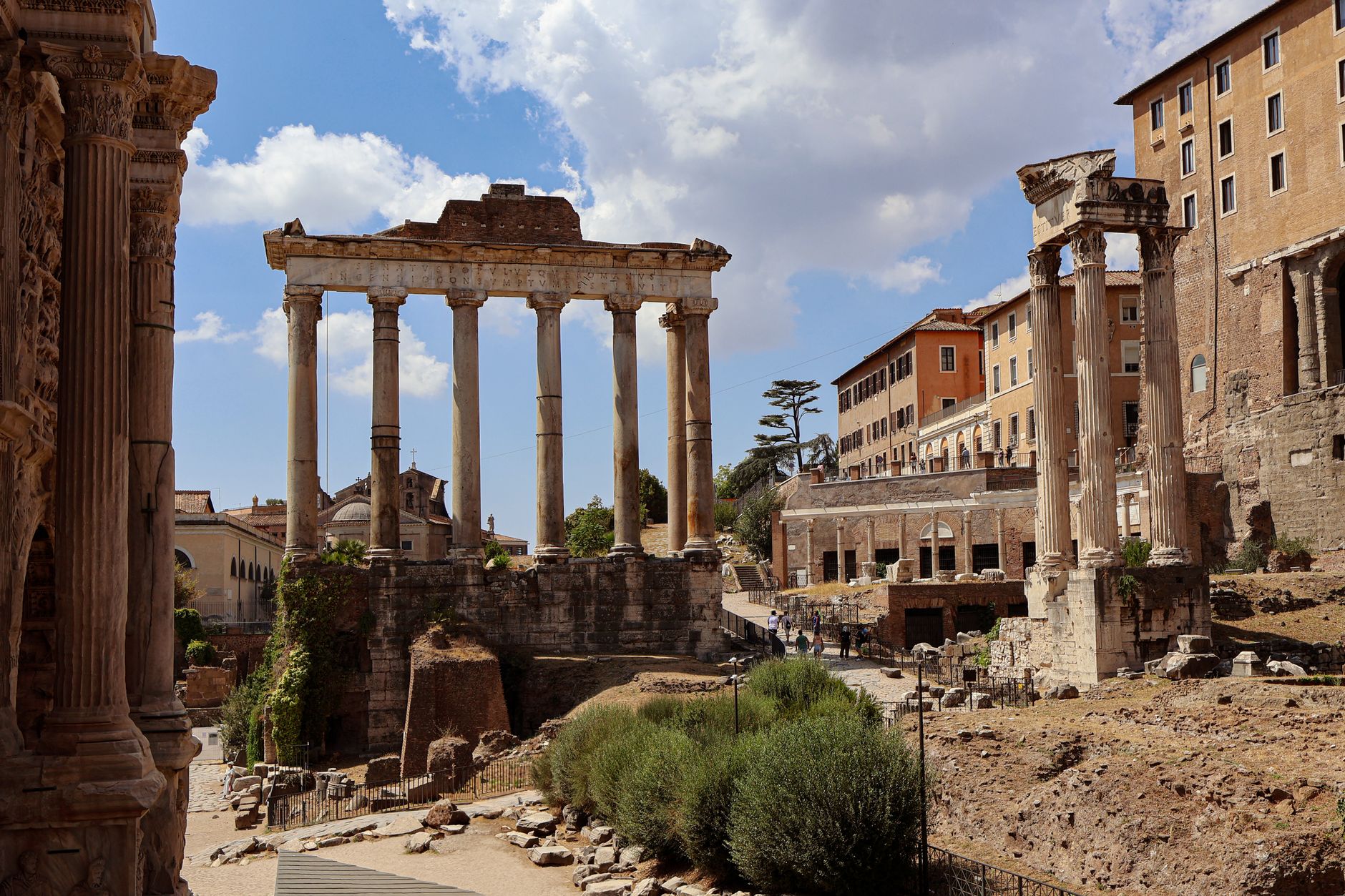
On 15 February, two bands of young Roman aristocrats stripped to loincloths, sacrificed goats at a cave on the Palatine Hill, and then ran through the streets striking bystanders, especially women, with strips of bloody goatskin. This was not a riot. It was the Lupercalia, one of the oldest festivals on the Roman calendar, and it was still being celebrated in the late fifth century CE, centuries after many other pre-Christian Roman rites had quietly disappeared.
The cave where the ritual began
The festival centered on the Lupercal, a cave on the southwestern corner of the Palatine Hill that Roman tradition identified as the exact spot where the she-wolf suckled the infant twins Romulus and Remus. That founding legend gave Lupercalia a built-in connection to Rome's origin myth that most festivals lacked, and it is part of why Julius Caesar added a third college of priests, the Luperci Iulii, to the two existing ones, the Luperci Quinctiales and Luperci Fabiani, in 44 BCE, binding his own family name to one of the city's oldest rites.
What the Luperci actually did, step by step
- Priests called Luperci, drawn from young noble families, gathered at the Lupercal cave.
- Goats were sacrificed, along with a dog, by the presiding priests.
- Two young Luperci had their foreheads touched with a blade dipped in the sacrificial blood, then wiped clean with wool soaked in milk; ancient sources say the youths were required to laugh at this point in the ritual.
- The goat hides were cut into strips called februa, from which the month of February likely takes its name.
- Wearing only loincloths cut from the remaining goatskin, the Luperci ran a traditional route around the base of the Palatine.
- As they ran, they struck people in the street, particularly women, with the februa strips, a practice believed to promote fertility and ease childbirth.
| Element | Detail |
|---|---|
| Date | 15 February |
| Location | The Lupercal cave, Palatine Hill |
| Priestly colleges | Luperci Quinctiales, Luperci Fabiani, later Luperci Iulii |
| Sacrificial animals | Goats and a dog |
| Famous recorded instance | 44 BCE, Mark Antony as a Lupercus offers Caesar a crown |
Caesar, Antony, and a crown offered twice
The best-documented single performance of Lupercalia comes from 44 BCE, barely a month before Julius Caesar's assassination. Plutarch and later Suetonius describe Mark Antony, running as a Lupercus, offering Caesar a diadem during the festival, which Caesar publicly refused, reportedly to gauge the crowd's reaction to any suggestion he might accept kingship. The episode shows that even a rite this old and ritualized could be repurposed as a piece of political theater in front of a Roman audience that knew exactly what it was watching.
Who did Lupercalia actually honor?
Roman antiquarians themselves disagreed about which god stood behind the festival. Some ancient writers connected it to Faunus, a Roman pastoral god loosely equated with the Greek Pan, since both were associated with wild places, goats, and fertility. Others pointed to a separate, more obscure god named Inuus, or even to a deity simply called Lupercus, whose name might derive from the festival rather than the festival deriving from his. Modern scholars have never fully settled which explanation came first; it is entirely possible the ritual predates any single fixed divine name attached to it, and that later Romans worked backward from an old practice to assign it a patron god, rather than the reverse.
The Valentine's Day connection that isn't well supported
A popular claim holds that Lupercalia is the pagan origin of Valentine's Day, with the Church supposedly replacing the festival with the feast of a Christian martyr to tame its sexual elements. The chronology does not support this neatly: Pope Gelasius I abolished Lupercalia around 494 CE, but Valentine's Day as a romantic holiday was not established until centuries later, largely through the medieval poetry of figures like Geoffrey Chaucer in the 14th century. No ancient source ties Lupercalia to romantic pairing in the way later folklore claims. This is one of the most frequently repeated inaccuracies about Roman religion, and readers should treat the Valentine's Day link as a much later legend, not a documented continuity.
Why a fertility ritual needed a founding myth attached
Many Roman festivals combined agricultural or bodily concerns with civic identity, but Lupercalia fused them unusually tightly. The ritual's goal, encouraging fertility and safe childbirth, was a private, bodily concern; its setting, the cave of Rome's founding wolf, was a public, civic one. Running the sacred boundary of the original Palatine settlement, called the pomerium in its earliest form, also tied the festival to ideas about protecting the city's edge, not unlike other boundary-walking rituals in Roman religion. The combination helped Lupercalia survive as a public spectacle long after some purely private household rites had faded from public memory.
Common mistakes about Lupercalia
- Calling it the ancient version of Valentine's Day. The timeline does not line up, and no ancient source draws this connection; it is a much later invented tradition.
- Assuming the Luperci ran completely naked. Ancient depictions and descriptions indicate a loincloth made from the sacrificed goat's hide, not full nudity.
- Treating the women struck by the thongs as victims of violence in the modern sense. Ancient sources, including Plutarch, present the strikes as a welcomed ritual associated with fertility, not an assault; women reportedly held out their hands to receive the blows.
- Assuming this was a minor, obscure rite. Lupercalia survived in public celebration into the late fifth century CE, longer than many other traditional Roman festivals after Christianity became dominant.
Lupercalia sat within the same yearly rhythm as the solemn Parentalia, which opened just two days earlier on 13 February, showing how abruptly Rome's religious calendar could shift tone from mourning the dead to celebrating fertility. For more on how priestly colleges like the Luperci fit into Rome's wider religious structure, see the priestly colleges guide or browse the festivals and religion category.
Sources
- Ovid, Fasti (Book 2, 15 February entry) — Describes the festival's rites and the goatskin thongs in detail.
- Plutarch, Life of Caesar (Chapter 61) — Describes Mark Antony offering Caesar a crown during the 44 BCE Lupercalia.
- Plutarch, Life of Romulus (Chapter 21) — Discusses the festival's connection to the founding legend and possible origins.
- Suetonius, Life of Julius Caesar (Divus Iulius 79) — Independent account of the crown-offering episode.
Frequently asked questions
What does the word Lupercalia mean?
The name is connected to lupus, the Latin word for wolf, and to the Lupercal cave on the Palatine Hill where, according to Roman legend, a she-wolf nursed Romulus and Remus. The festival's priests, the Luperci, took their name from the same root.
Is Lupercalia really the origin of Valentine's Day?
This is a popular but poorly supported claim. No ancient source connects Lupercalia to romantic love or pairing, and the modern romantic Valentine's Day tradition developed centuries later, mainly through medieval European poetry, well after Lupercalia had been officially abolished around 494 CE.
Why were goats sacrificed at Lupercalia instead of other animals?
Goats were strongly associated with fertility and wild, untamed nature in Roman and broader Mediterranean religious thought, making them a fitting sacrificial animal for a ritual explicitly aimed at promoting fertility and safe childbirth.
When was Lupercalia finally stopped?
Pope Gelasius I is traditionally credited with suppressing the public celebration of Lupercalia around 494 CE, making it one of the longer-surviving traditional Roman festivals after the Christianization of the empire.