
The Pontifex Maximus and Rome's Priestly Colleges
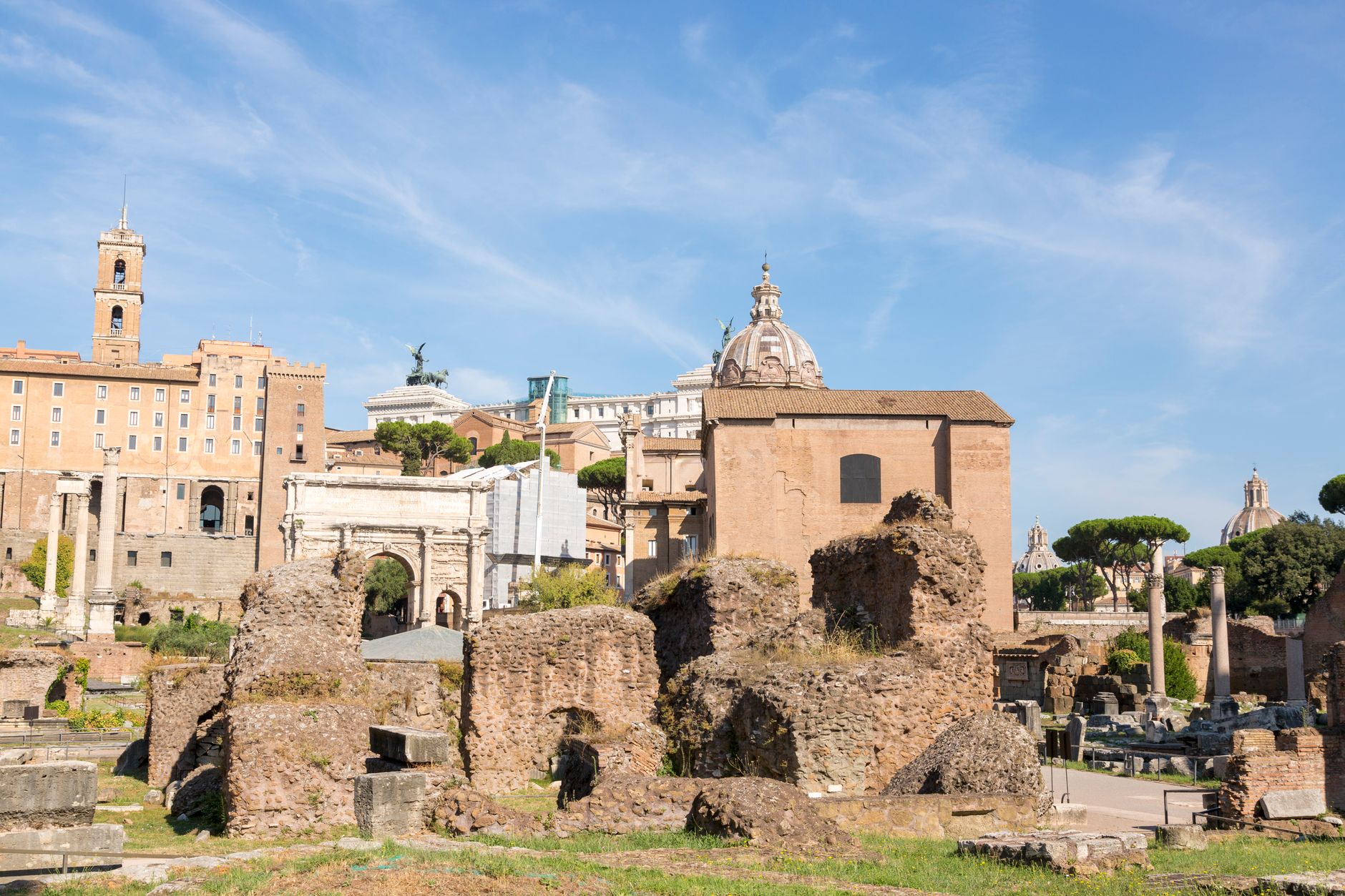
Julius Caesar held the office of Pontifex Maximus, Rome's highest religious post, while also serving as a general, a consul, and eventually dictator. This was not a conflict of interest by Roman standards; it was the system working as designed. Roman priesthoods were civic offices held by members of the political elite alongside their normal careers, not positions filled by a separate professional clergy devoted solely to religious life.
The Pontifex Maximus: head of Rome's religious law
The Pontifex Maximus led the collegium pontificum, the college of pontiffs, and held effective authority over Roman state religion as a whole, including control of the calendar, oversight of the Vestal Virgins, and the power to interpret and record religious law. Unlike most Roman magistracies, which were annual, the Pontifex Maximus held the post for life. Julius Caesar won election to it in 63 BCE through unusually aggressive campaigning and bribery, despite being a relatively junior political figure at the time, which shows how much raw power and prestige the office carried independent of age or seniority in the normal political ladder. From Augustus onward, the title became permanently attached to the emperor, a practice that continued until the emperor Gratian renounced it in the late fourth century CE.
The flamines: priests tied to a single god
Below the pontiffs sat fifteen flamines, each dedicated to one specific deity. Three flamines maiores served the most important gods: the Flamen Dialis for Jupiter, the Flamen Martialis for Mars, and the Flamen Quirinalis for Quirinus. Twelve flamines minores served lesser deities. The Flamen Dialis faced the strictest restrictions of any Roman priest: he could not touch a corpse, ride a horse, swear an oath, or spend a night outside Rome, and his wife, the Flaminica Dialis, held her own set of ritual duties tied directly to his office, so that the marriage itself functioned as part of the priesthood.
The augurs: a separate college entirely
The collegium augurum, the college of augurs, operated independently from the pontiffs, though its members were drawn from the same senatorial elite. Augurs did not predict the future broadly; their job was to determine whether the gods approved of a specific proposed action, such as holding an assembly or starting a military campaign, by reading signs in the sky and the behavior of birds. Because no major public act could proceed without favorable auspices, the augurs held a quiet veto power over Roman political life that rivaled the pontiffs' control of the calendar.
| Priesthood | Core duty | Approx. membership |
|---|---|---|
| Pontifex Maximus | Head of state religion, calendar, religious law | 1, life tenure |
| Pontifices | Oversee sacrifices, Vestals, religious law | Variable, grew over time (up to 15-16 by late Republic) |
| Flamines maiores | Dedicated priest of Jupiter, Mars, or Quirinus | 3 |
| Flamines minores | Dedicated priest of a lesser deity | 12 |
| Augurs | Read sky and bird signs to confirm divine approval | Variable, grew to 16 by late Republic |
| Vestal Virgins | Tend Vesta's sacred fire, guard the Palladium | 6 |
| Quindecimviri sacris faciundis | Guard and consult the Sibylline Books | 15 (originally fewer) |
| Fetiales | Perform rituals for declaring war and making treaties | 20 |
Other colleges: feasts, treaties, and the Sibylline Books
Several smaller colleges rounded out Rome's religious structure. The Quindecimviri sacris faciundis guarded the Sibylline Books, a collection of Greek oracular verses consulted only in genuine crises, on Senate order, to determine what expiatory rituals a troubling omen required. The Septemviri epulones organized the public sacred feasts held in connection with the major games. The Fetiales performed the formal rituals surrounding declarations of war and the ratification of treaties, giving Roman warfare a religious procedural layer on top of its political one. None of these roles came with a salary; they were honors that enhanced a man's standing for his ordinary political career.
Co-optation versus election
For most of the Republic, priestly colleges filled vacancies themselves through co-optation, existing members voting to admit a new colleague, which kept these honors within a tight circle of established families. A law passed in 104 BCE, the lex Domitia, shifted the process so that major priesthoods were instead filled by a form of popular election among a limited group of tribes, a change meant to loosen the colleges' self-perpetuating control, though co-optation was later partly restored under Sulla and remained a point of ongoing political contention through the late Republic.
A checklist: was a Roman priesthood a full-time clergy job?
- Did it require giving up other careers? No — most priests held political and military office simultaneously.
- Was it a paid position? No — priesthoods were unpaid honors, though they carried real prestige and influence.
- Was it held for life? It depended: the Pontifex Maximus and flamines served for life; many lesser priestly posts could be combined with ordinary annual magistracies.
- Could women hold these offices? Almost never, with the striking exception of the Vestal Virgins and the Flaminica Dialis, who held real ritual roles of her own.
- Did it require specialized theological training? No — priests learned specific ritual formulas and procedures, closer to a civic skill set than a theological education.
Common mistakes about Roman priesthoods
- Assuming Rome had a professional clergy class like later churches. Nearly all Roman priests were part-time officeholders who held other political or military positions at the same time.
- Treating the Pontifex Maximus as equivalent to a pope from the start. The later Christian papal title borrowed the name centuries afterward; the Republican and early Imperial office had a very different religious and political function.
- Assuming all priesthoods worked the same way. The heavily restricted, single-god focus of a flamen had almost nothing in common day-to-day with the broader administrative role of a pontifex or the specialized sky-reading of an augur.
- Overlooking the Vestals and the Flaminica Dialis when discussing 'the priesthoods.' Women held real, structurally defined ritual roles in Roman religion, not just informal participation.
This structure of overlapping, part-time religious offices explains why Rome could run major public rituals, like a state sacrifice or the reading of omens before a military campaign, without any single centralized religious authority resembling a church hierarchy. For the rest of Rome's sacred institutions, see the festivals and religion category.
Sources
- Cicero, De Domo Sua (Speech, 57 BCE) — Discusses the legal and religious authority of the pontiffs from a contemporary political perspective.
- Livy, Ab Urbe Condita (Book 1, 20) — Describes the traditional founding of several priestly colleges under King Numa.
- Suetonius, Life of Julius Caesar (Divus Iulius 13) — Describes Caesar's election as Pontifex Maximus in 63 BCE.
- Varro, Antiquitates Rerum Divinarum (Fragments preserved by later authors) — A major lost Roman antiquarian survey of religious institutions, cited extensively by later writers.
Frequently asked questions
Was the Pontifex Maximus the same as a modern pope?
Not functionally. The Roman Pontifex Maximus headed state religious law and the calendar and was usually a sitting politician; the Christian title of pope developed independently centuries later, even though it later adopted the same Latin name.
Could the same man hold multiple priesthoods and political offices at once?
Yes. Julius Caesar held the office of Pontifex Maximus while actively pursuing a political and military career, which was entirely normal; Roman priesthoods were civic honors layered on top of, not separate from, a man's political life.
What was the difference between a pontifex and an augur?
Pontiffs oversaw religious law, the calendar, sacrifices, and the Vestal Virgins broadly; augurs belonged to a separate college focused specifically on reading sky and bird signs to confirm whether the gods approved a proposed public action.
Did any women hold formal priestly office in Rome?
Yes. The six Vestal Virgins held one of Rome's most prestigious and legally privileged religious offices, and the Flaminica Dialis, wife of the Flamen Dialis, held her own defined ritual duties connected to that priesthood.