
The Capitoline Hill and the Temple of Jupiter Optimus Maximus
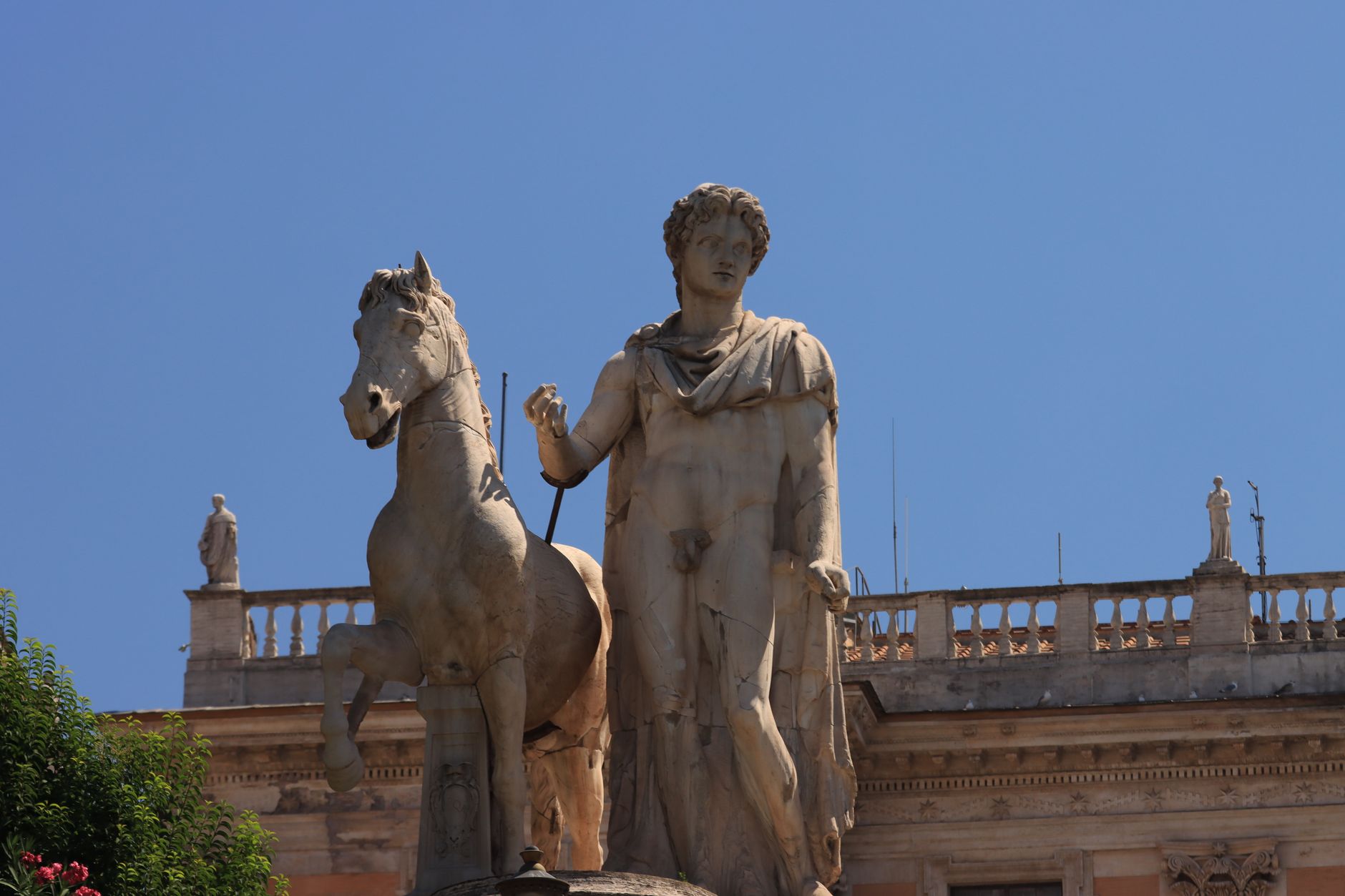
The Temple of Jupiter Optimus Maximus burned to the ground at least twice in its history, and each time Rome rebuilt it grander than before. Perched on the southern summit of the Capitoline Hill, this temple was the destination of every triumphal procession and the symbolic seat of Roman state religion for nearly a thousand years, yet almost nothing of the building visible to ancient worshippers survives above ground today.
A hill with two sacred summits
The Capitoline Hill actually had two distinct high points in antiquity: the Capitolium proper, where the great temple stood, and the Arx, a separate northern summit that served as a citadel and housed the Temple of Juno Moneta. Roman tradition held that workers digging the temple's foundations found a human head, interpreted as an omen that Rome would become the head of the world; this story, whether literally true or a later invented etymology, was used to explain the hill's name, Capitolium, from caput, meaning head. The hill's steep, defensible sides made it Rome's last refuge during the Gallic sack of the city around 390 BC, according to the famous legend of the sacred geese of Juno raising the alarm.
Dedicating a temple to three gods at once
The Temple of Jupiter Optimus Maximus was unusual in Roman religious architecture because its cella, or inner chamber, was divided into three parallel rooms sharing one roofline, each dedicated to a different deity: Jupiter in the center, with Juno and Minerva flanking him on either side. This triad, sometimes called the Capitoline Triad, gave the temple a structure unlike the simpler single-chamber temples common elsewhere in the city, such as the Temple of Saturn. Roman tradition dated the temple's original dedication to 509 BC, under the first year of the Republic, crediting its construction to the last king, Tarquinius Superbus, even though it was formally dedicated only after the monarchy had already fallen.
Three fires, three rebuildings
The original temple stood for roughly four and a half centuries before it burned down in 83 BC during civil unrest under Sulla's dictatorship. It was rebuilt and rededicated in 69 BC, only to burn again in 69 AD during the chaotic civil wars of that single year, famously called the Year of the Four Emperors. The emperor Vespasian rebuilt it once more, and after a further fire under Titus in 80 AD, it was rebuilt a final time under Domitian, who reportedly spared no expense, reportedly gilding the roof tiles. Each rebuilding likely kept the temple's general footprint and triple-cella plan while updating its materials and decoration to contemporary Imperial taste.
| Phase | Date | Cause / Notes |
|---|---|---|
| Original dedication | 509 BC (traditional) | Built under Tarquinius Superbus, dedicated at start of Republic |
| First major fire | 83 BC | Destroyed during civil conflict under Sulla |
| First rebuild dedicated | 69 BC | Rebuilt largely on the old plan |
| Second fire | 69 AD | Burned during the civil wars of the Year of the Four Emperors |
| Vespasian's rebuild | c. 75 AD | Restored shortly after the fire |
| Third fire and final rebuild | 80 AD fire; rebuilt under Domitian | Lavishly decorated, including gilded roofing |
The end point of every triumph
A Roman general awarded a triumph marched his army, captives, and spoils through the city along a set route, through the Roman Forum, and finally up the slope of the Capitoline to this temple, where he offered sacrifice to Jupiter and deposited his laurel-wreathed fasces at the god's feet. This made the temple the symbolic finish line of Roman military success for centuries, tying the state's most public celebrations of victory directly to Jupiter's cult. Consuls also opened their year of office with a sacrifice here, linking the temple to the civil calendar as much as to the military one.
The temple vs a comparable Greek temple
- Plan: The Capitoline temple used a triple cella for three gods sharing one structure; most major Greek temples, such as the Parthenon, housed a single principal deity in one main chamber.
- Material tradition: The earliest Capitoline temple used timber, mud brick, and terracotta decoration in the Etruscan architectural tradition, not solid marble; many famous Greek temples were built in stone or marble from the outset.
- Columns: Etruscan-style temples like the early Capitolium used widely spaced wooden columns only across the front portico, unlike the continuous stone colonnades common on Greek temples.
- Role: The Capitoline temple was tied to a specific political ritual, the triumph, in a way without a precise Greek parallel.
What survives today
Very little of the ancient temple is visible above ground; the site is now largely occupied by the Capitoline Museums' Palazzo dei Conservatori and surrounding buildings. Portions of the massive podium, built from blocks of grey tufa stone, can still be seen incorporated into museum basements and courtyards, giving a sense of the temple's considerable scale even without a reconstructed superstructure. Visitors expecting a Pantheon-style standing building will be disappointed; this is a site understood mainly through excavated foundations and ancient textual description rather than a complete structure.
Common mistakes about the Temple of Jupiter Optimus Maximus
- Expecting a standing building. Unlike the Pantheon, almost nothing of this temple survives above its podium; most of the hill is covered by later construction.
- Assuming it was dedicated to Jupiter alone. The temple housed a triad of three gods, Jupiter, Juno, and Minerva, each with a separate chamber.
- Treating the 509 BC date as archaeologically proven. That date comes from Roman literary tradition; it is plausible but not independently confirmed by excavation to that precision.
- Confusing the Capitolium with the Arx. These were two separate summits of the same hill with different buildings and functions.
For the legendary founding-era counterpart to this hill's state cult, see how Rome's origin story centers instead on the Palatine Hill, or browse the full sacred places and monuments category for related sites.
Sources
- Livy, Ab Urbe Condita (Book 1) — Describes the legendary construction of the temple under Tarquinius Superbus.
- Tacitus, Histories (Book 3) — Describes the 69 AD fire during the civil wars of that year.
- Suetonius, Life of Domitian (General) — References Domitian's lavish final rebuilding of the temple.
- Plutarch, Life of Publicola (General) — Discusses the temple's early dedication in the context of the Republic's founding.
Frequently asked questions
When was the Temple of Jupiter Optimus Maximus first dedicated?
Roman tradition dates its dedication to 509 BC, at the start of the Republic, though construction is credited to the last king, Tarquinius Superbus. This date comes from literary tradition rather than independent archaeological proof.
Why did the temple have three separate chambers?
The temple housed the Capitoline Triad: Jupiter in the central chamber, flanked by Juno and Minerva in their own chambers under the same roofline, an unusual triple-cella plan for a major Roman temple.
How many times did the temple burn down?
At least twice in a fully documented way: once in 83 BC during civil unrest under Sulla, and again in 69 AD during the civil wars of the Year of the Four Emperors; a further fire struck shortly after under Titus before Domitian's final rebuild.
Can you visit the Temple of Jupiter Optimus Maximus today?
The site itself is largely built over by the Capitoline Museums complex. Portions of the ancient podium survive and can be seen in museum basements and courtyards, but there is no standing temple structure to tour.