
The Temple of Saturn and Rome's State Treasury
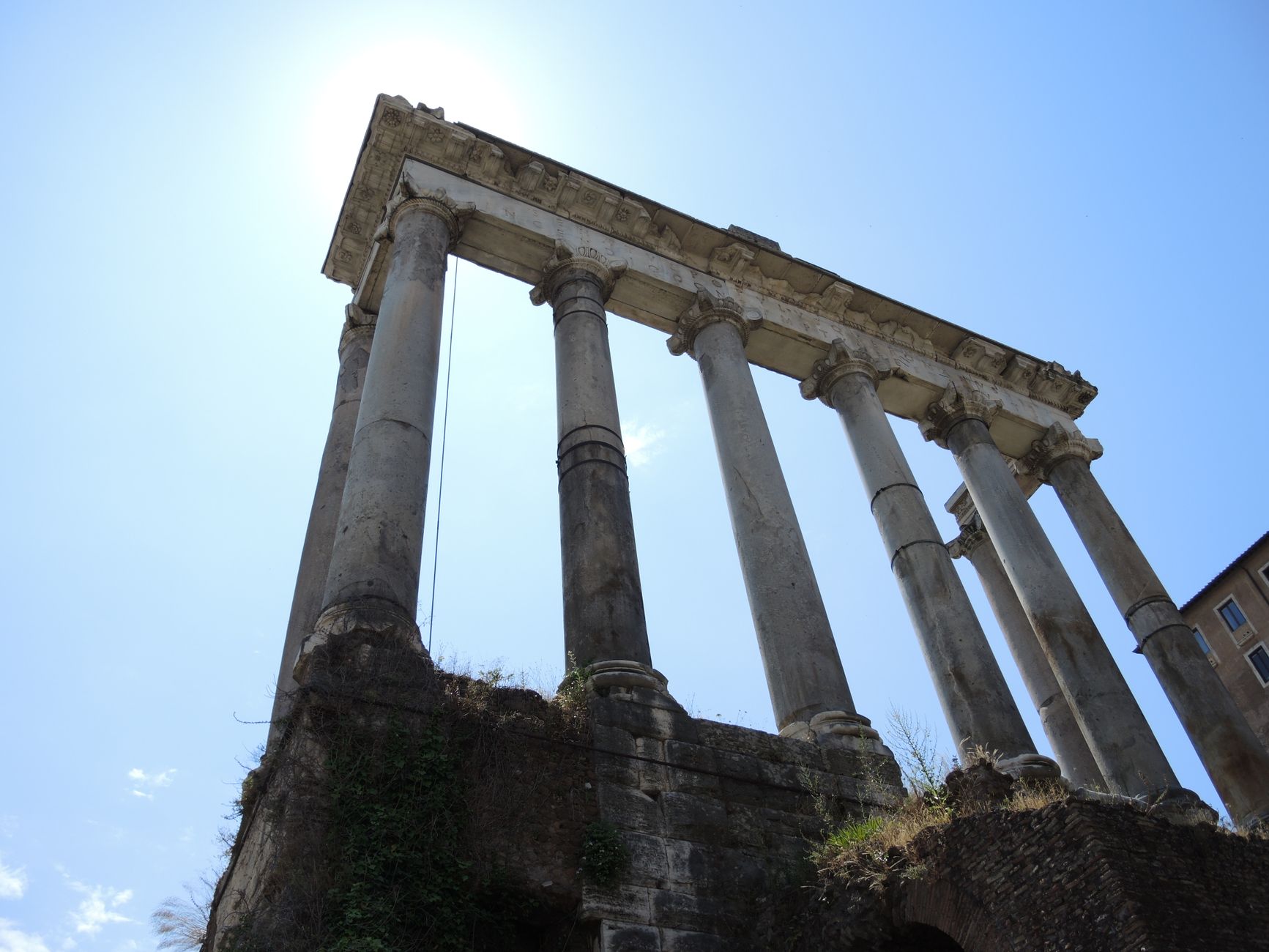
For most of Roman history, the empire's central financial reserve was not stored in anything resembling a modern bank or government vault. It sat inside the base of the Temple of Saturn, at the foot of the Capitoline Hill, where Rome's gold, silver, and official state documents were physically kept under the protection of the god for whom the building was named.
An old god tied to a founding-era date
Roman tradition dated the dedication of the original Temple of Saturn to 497 BC, remarkably early in the Republic's history, and connected Saturn to Rome's legendary pre-urban past, a supposed golden age of agricultural abundance and social equality before the city's founding. This mythic backstory gave the December festival of Saturnalia, held on 17 December to mark the temple's dedication anniversary, its theme of temporary social role-reversal, a deliberate, licensed echo of that imagined lost age of equality.
Why a temple, specifically, held the treasury
The practical reason the Aerarium Saturni, as the treasury was called, ended up housed in a temple rather than a dedicated secular building reflects how closely religious and administrative functions were intertwined in Roman state structure; placing the public funds under a god's direct protection gave the treasury's security a sacred, not merely legal, guarantee, and temples generally functioned as the most secure, continuously staffed public buildings available in the early city. The quaestors, junior financial magistrates, administered the treasury from this location for centuries, and it also stored official bronze tablets recording Senate decrees and state archives, making the temple a combined financial and record-keeping institution, not solely a place of worship.
What happened there: key events
During the civil war between Julius Caesar and Pompey in 49 BC, Caesar reportedly broke into the Aerarium Saturni against the resistance of a tribune guarding it, seizing funds to finance his campaign, an episode recorded by multiple ancient historians as a dramatic breach of normal constitutional restraint. This event illustrates just how real and immediate the temple's financial function was; it was not a symbolic or ceremonial treasury but an actual, physically defended store of movable state wealth that a general at war genuinely needed and fought over.
| Event | Date | Significance |
|---|---|---|
| Original dedication | 497 BC (traditional) | Early Republic; tied to Saturn's mythic golden age |
| First Saturnalia celebrations | Attested by mid-Republic | Marked the temple's dedication anniversary, 17 December |
| Caesar seizes treasury funds | 49 BC | During civil war against Pompey's faction |
| Temple rebuilt | Late 4th century AD | Current surviving columns date to this late rebuild |
| Dedication inscription on current ruins | Credited to Senate restoration, exact year debated | Visible on the architrave today |
A statue bound at the feet
Ancient sources describe the cult statue of Saturn inside the temple as having its feet bound together with wool bindings for most of the year, loosened only during the Saturnalia festival itself. Writers connected this practice to ideas about restraining the god's power or marking the temporary, licensed freedom of the festival period, when the usual bindings of social hierarchy were loosened along with the statue's own woolen restraints. The statue was also reportedly filled with oil, a detail Roman antiquarians found puzzling enough that they recorded competing explanations for it, none of which survives as fully convincing to modern historians. These details illustrate how much ordinary ritual practice at this temple depended on specific physical objects and actions that went well beyond simply storing state money in the building's basement.
Saturn's wider place in Roman religious thought
Saturn occupied an unusual position in Roman religious thought generally, treated less as an actively worshipped state god with ongoing civic cult activity comparable to Jupiter, and more as a figure of historical and mythological memory, representing a vanished earlier age. Roman writers linked him to the Greek Titan Cronus through the practice of equating foreign and native gods by shared function, even though Saturn's own Roman cult, centered specifically on this one temple and its December festival, developed largely independently of continuous Greek influence on a day-to-day ritual level.
The temple vs the state archive at the Tabularium
- Temple of Saturn: held physical treasury reserves (gold, silver, coined money) plus some official records, administered by quaestors.
- Tabularium: a separate, purpose-built archive structure constructed later, in 78 BC, on the slope of the Capitoline, specifically to house Rome's growing body of official documents.
- Relationship: the two buildings stood close together near the base of the Capitoline, reflecting how financial and record-keeping functions clustered physically even as they were handled by separate institutions.
What you can still see there today
- Eight tall granite and marble columns, the most recognizable standing ruin at the western end of the Roman Forum.
- Part of the architrave bearing a Latin restoration inscription, though it refers to a later Senate-sponsored rebuilding, not the original 497 BC temple.
- The temple's podium and some foundation walls beneath the standing columns.
- No surviving physical treasury contents; the gold, silver, and records themselves have not survived at the site.
Common mistakes about the Temple of Saturn
- Assuming the standing columns date to 497 BC. The current ruins reflect a late 4th-century AD rebuild, roughly eight centuries after the original dedication.
- Thinking the treasury was purely symbolic. It held genuinely physical state wealth and records, and was treated as a real strategic target during civil conflict, as Caesar's 49 BC seizure shows.
- Confusing the Temple of Saturn with the Temple of Jupiter Optimus Maximus on the Capitoline Hill. These are two separate structures at different points along the same general area, with very different religious and administrative functions.
- Assuming Saturnalia itself took place inside the temple. The festival's public sacrifice occurred at the temple on its dedication anniversary, but most of the holiday's actual celebration, including gift exchange and reversed household roles, happened in private homes across the city.
The temple's financial role placed it at the literal and symbolic edge of the Roman Forum, directly beneath the state's chief religious site on the Capitoline Hill. For more on Rome's sacred architecture, see the sacred places and monuments category.
Sources
- Livy, Ab Urbe Condita (Book 2) — Records the traditional 497 BC dedication date of the Temple of Saturn.
- Plutarch, Life of Caesar (General) — Describes Caesar's seizure of treasury funds during the 49 BC civil war.
- Cassius Dio, Roman History (Book 41) — Independent account of Caesar forcing entry to the Aerarium Saturni.
- Macrobius, Saturnalia (Book 1) — Discusses the festival's connection to the temple's dedication anniversary.
Frequently asked questions
Why was Rome's state treasury kept inside a temple?
Religious and administrative functions were closely intertwined in Roman state structure, and placing public funds under a god's direct protection gave the treasury a sacred as well as legal guarantee of security. Temples were also among the most secure, continuously staffed buildings in the early city.
What actually happened to the Temple of Saturn's treasury during Caesar's civil war?
In 49 BC, Julius Caesar reportedly forced his way into the Aerarium Saturni against the resistance of a tribune guarding it, seizing state funds to help finance his campaign against Pompey's faction, an episode recorded by multiple ancient historians.
Are the columns standing at the Temple of Saturn today from the original building?
No. The eight surviving columns date to a rebuild carried out in the late 4th century AD, roughly eight centuries after the temple's traditional original dedication in 497 BC.
What is the difference between the Temple of Saturn and the Tabularium?
The Temple of Saturn held the state's physical treasury reserves and some records, administered by quaestors, while the Tabularium was a separate archive building constructed in 78 BC specifically to house Rome's official documents; the two stood close together near the Capitoline Hill.