
Campus Martius: Rome's Field of War and Worship
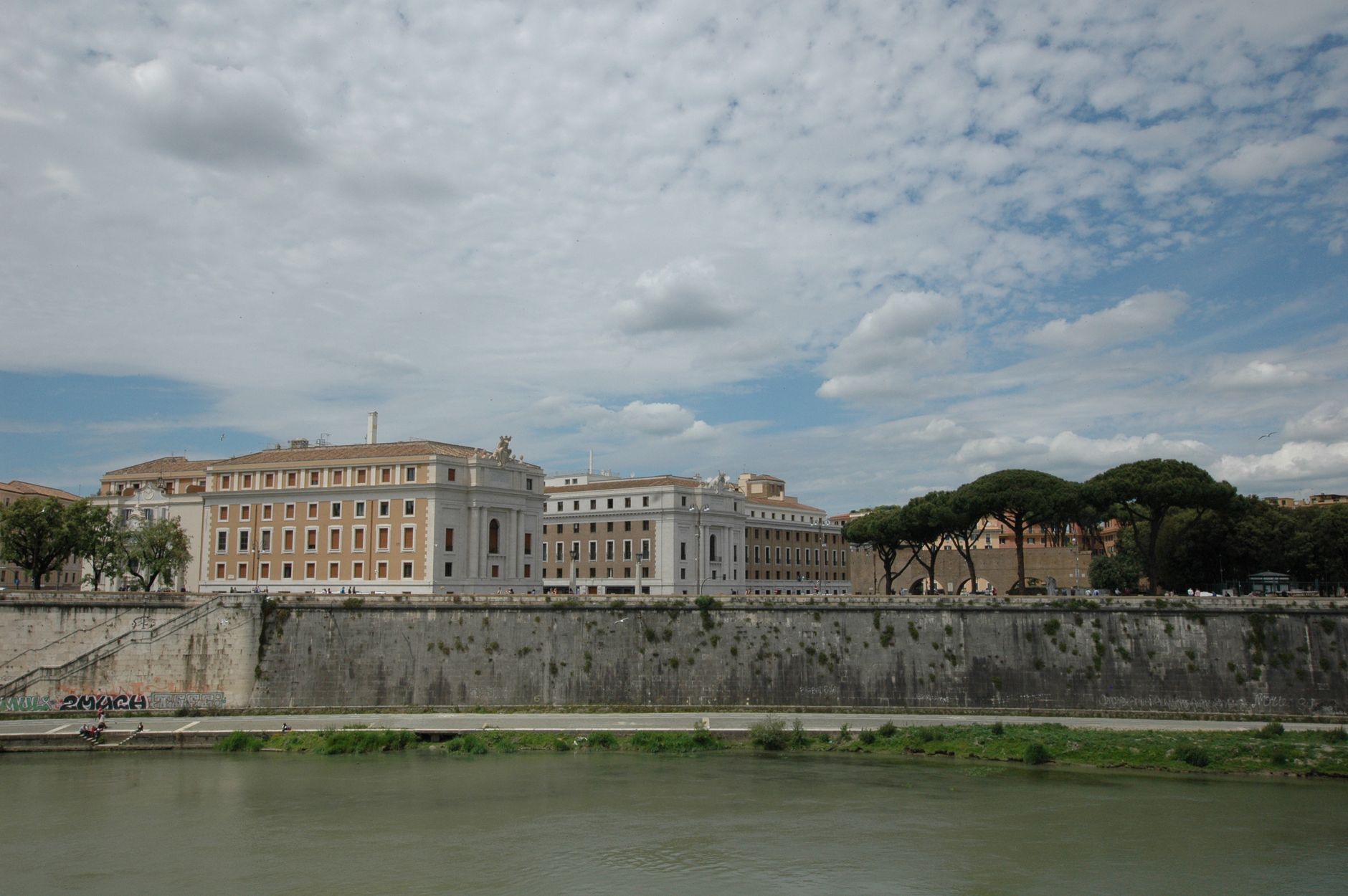
For centuries, the Campus Martius was intentionally kept free of permanent buildings because Roman law barred an army from entering the city proper, so soldiers trained, assembled, and were reviewed on this open floodplain outside the formal city boundary instead. By the time of Augustus, the same field held some of the most ambitious architecture in the Roman world, including a giant sundial built from an obelisk and a monumental mausoleum for the emperor himself.
Why this field had to stay open
The Campus Martius, the Field of Mars, sat on the floodplain of the Tiber north and west of the city's early core, outside the pomerium, Rome's sacred inner boundary. Because armed troops were legally forbidden from crossing into the city while under arms, this field served as the designated space where Roman citizen-soldiers mustered, trained, and were reviewed before campaigns, and where the census-based military assembly, the comitia centuriata, met to vote, since its members were organized along military lines. Tradition held the field was named for the god Mars and had once belonged to the exiled last king, Tarquinius Superbus, before being dedicated to public use after the monarchy's fall.
From open field to templed landscape
Over time, Romans built religious structures on the Campus Martius despite its outdoor, military character, including the original Pantheon built by Agrippa around 25 BC, part of his broader development of the area alongside the Baths of Agrippa and a monumental public park. The Temple of Bellona, goddess of war, and the altar of Mars itself also stood here, fitting given the field's martial associations; the Senate sometimes met at the Temple of Bellona specifically to receive foreign envoys or generals who could not legally enter the city while technically still under military command.
Augustus reshapes the field
Augustus transformed the Campus Martius more than any single figure before him, adding the Ara Pacis, an altar dedicated in 9 BC celebrating the peace achieved under his rule, decorated with detailed relief sculpture of the imperial family and religious processions. Nearby stood the Horologium Augusti, an enormous sundial using an Egyptian obelisk as its gnomon, and the Mausoleum of Augustus, a massive circular tomb begun around 28 BC where Augustus and several family members were eventually buried. Together, these projects turned a working field for military muster into a showcase of Augustan religious and dynastic messaging, without erasing its continued use for genuine civic assembly.
| Structure | Approx. date | Function |
|---|---|---|
| Comitia centuriata assembly ground | Republic-era, ongoing | Military-based voting assembly |
| Original Pantheon (Agrippa) | c. 25 BC | Temple to the gods collectively |
| Mausoleum of Augustus | begun c. 28 BC | Imperial tomb |
| Ara Pacis | dedicated 9 BC | Altar celebrating Augustan peace |
| Horologium Augusti (sundial) | 10 BC | Giant obelisk sundial marking Augustus's birthday alignment |
| Stagnum Agrippae / Baths of Agrippa | c. 25-19 BC | Public bathing and leisure complex |
A field still used for its original purpose, mostly
Even as monumental building increased, the Campus Martius never fully lost its original military and civic-assembly role during the Republic; triumphal generals awaiting permission to enter the city with their armies camped and waited here, sometimes for extended political negotiations, since crossing into Rome under arms without authorization was treated as deeply unlawful. This dual identity, a functioning military staging ground that was simultaneously accumulating some of the city's most elaborate religious architecture, makes the Campus Martius a useful corrective to any assumption that Roman sacred space and practical civic space were always kept physically separate.
Later additions: theaters and shrines
Later Republican and Imperial builders continued adding to the Campus Martius well beyond Augustus's projects. Pompey the Great built Rome's first permanent stone theater here around 55 BC, controversially attaching a small shrine to Venus Victrix to the top of its seating in order to get around conservative objections to a standing public theater, since a religious structure was easier to justify politically than secular entertainment architecture alone. The Senate met at the attached Curia of Pompey on at least one famous occasion: Julius Caesar was assassinated there in 44 BC, a reminder that the Campus Martius hosted senatorial business as well as military and religious activity. Later emperors, including Domitian and Hadrian, added further structures, including a stadium and additional bath complexes, so that by the high Empire the field combined leisure, religion, and government business within a single, continuously developing district just outside the city's sacred core.
Checklist: what you can still see in this area today
- The Pantheon, Hadrian's rebuild standing on part of Agrippa's original site, discussed in full in a dedicated article.
- The reconstructed Ara Pacis, now housed in a dedicated modern museum building near the Tiber.
- The relocated obelisk from the Horologium Augusti, now standing in the Piazza del Popolo.
- The ruined core of the Mausoleum of Augustus, restored and reopened to visitors in recent years.
- Scattered column fragments and foundations from the Baths of Agrippa complex, now largely built over by later city development.
Common mistakes about the Campus Martius
- Assuming it was always full of monuments. For much of the early and mid-Republic it was deliberately kept as largely open ground for military and assembly use.
- Confusing the original Pantheon here with Hadrian's later rebuild. Agrippa's rectangular temple and Hadrian's domed rotunda occupied the same general site but were architecturally very different buildings separated by roughly 150 years.
- Thinking the field was inside Rome's sacred city boundary. It sat outside the pomerium for most of its history, which is precisely why it could host armed troops.
- Assuming the Ara Pacis stands in its original location today. It was moved and reconstructed in a dedicated modern museum building in the 20th century, not left on its ancient find site.
The Campus Martius's outsider status relative to the city's sacred core mirrors, in a different way, the long exclusion of the Aventine Hill from the same ritual boundary. For the Pantheon's full architectural history, see the dedicated Pantheon article, and for more related sites browse the sacred places and monuments category.
Sources
- Livy, Ab Urbe Condita (Book 2) — References the Campus Martius's early association with Tarquinius Superbus and public dedication.
- Cassius Dio, Roman History (Book 53) — Describes Augustus's building program on the Campus Martius.
- Pliny the Elder, Natural History (Book 36) — Describes the Horologium Augusti obelisk sundial and the Mausoleum of Augustus.
- Suetonius, Life of Augustus (General) — Describes Augustus's mausoleum and burial on the Campus Martius.
Frequently asked questions
Why was the Campus Martius kept free of buildings for so long?
Roman law forbade armed troops from entering the city proper, and the Campus Martius lay outside the pomerium, Rome's sacred inner boundary, so it served as the designated open ground where soldiers mustered, trained, and were reviewed before campaigns.
What is the Horologium Augusti?
It was a giant sundial built by Augustus around 10 BC on the Campus Martius, using a relocated Egyptian obelisk as its gnomon. The obelisk now stands in the Piazza del Popolo in Rome.
Is the Ara Pacis still in its original location?
No. The Ara Pacis, Augustus's altar of peace dedicated in 9 BC, was moved and reconstructed inside a dedicated modern museum building in the 20th century, rather than remaining at its original ancient find site.
Was the original Pantheon on the Campus Martius the same building visitors see today?
No. Agrippa's original rectangular Pantheon, built around 25 BC, burned down; the domed rotunda seen today is a rebuild by the emperor Hadrian completed roughly 150 years later on largely the same site.