
The Lupercal: The Cave Where Rome's Myth Began
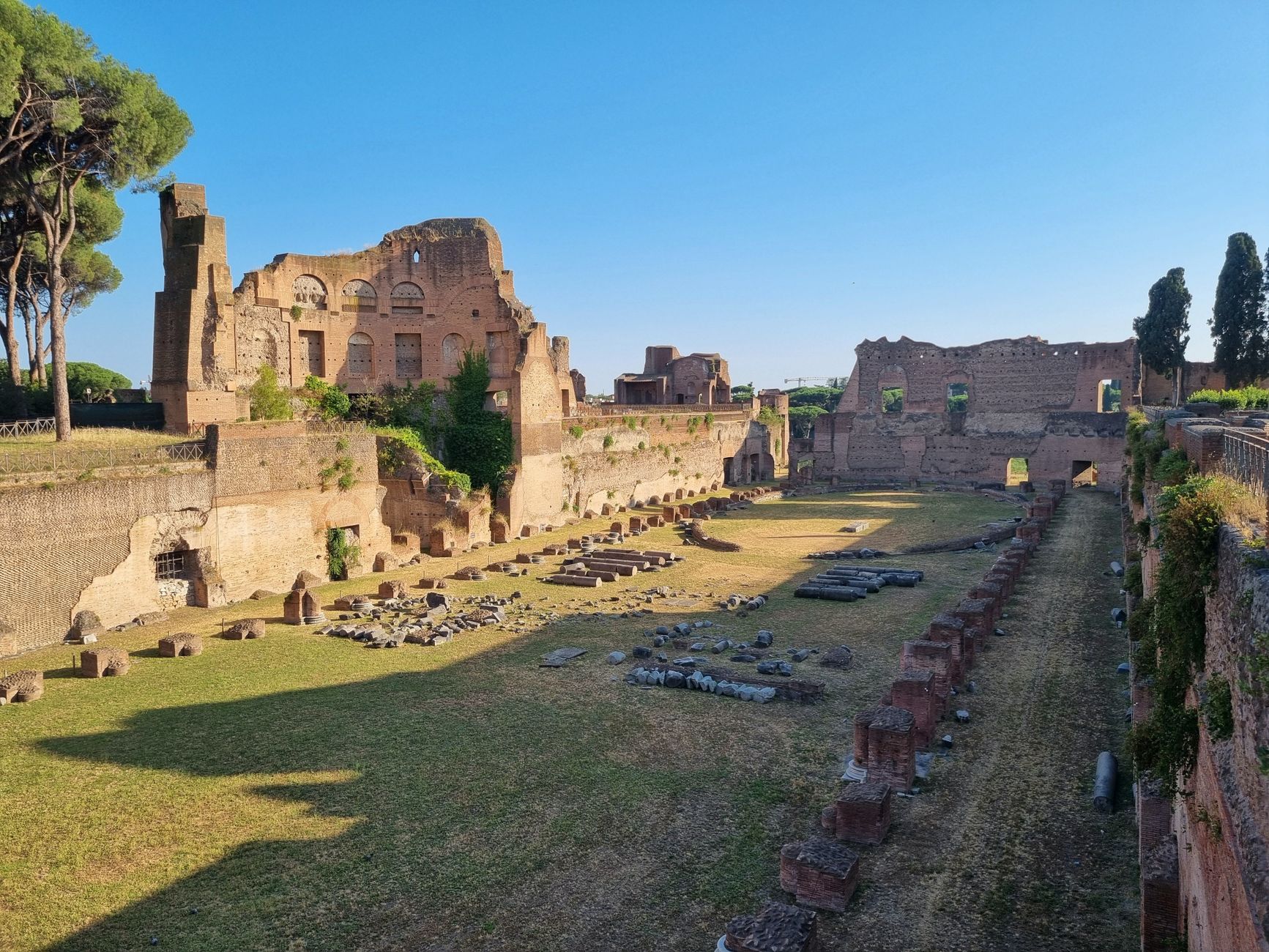
In 2007, Italian archaeologists announced they had located a vaulted, decorated cave buried about 16 meters beneath the ruins of Augustus's house on the Palatine Hill, and some researchers proposed it was the legendary Lupercal, the cave where Rome's foundation myth says a she-wolf nursed the infant twins Romulus and Remus. The announcement made international headlines. More than fifteen years later, the identification remains contested, and the cave itself has never been physically entered or fully excavated.
The myth the cave is supposed to represent
According to Roman legend, the twins Romulus and Remus, abandoned as infants on the orders of their great-uncle Amulius, were carried by the floodwaters of the Tiber and washed ashore near the base of the Palatine Hill. A she-wolf found and nursed them at a cave, later known as the Lupercal, before a shepherd named Faustulus discovered and raised them. This story, recorded by Livy and other ancient writers, became the founding image of Rome itself, reproduced on coins, in sculpture, and in the famous bronze Capitoline Wolf statue associated with the legend.
A real religious site, regardless of the exact cave's identity
Whatever its precise location, the Lupercal was a genuine, actively used religious site in ancient Rome, not merely a literary invention. It was the focal point of the annual Lupercalia festival, held on 15 February, during which priests called Luperci sacrificed goats at the site and ran a ritual circuit around the Palatine's base striking bystanders with strips of goatskin, a fertility rite attested by multiple ancient sources including Plutarch. The emperor Augustus is recorded as having restored or embellished the Lupercal as part of his broader religious restoration program, underscoring that this was a maintained, visited cult site well into the Imperial period, not a forgotten relic.
The 2007 discovery in detail
The team, led by archaeologist Irene Iacopi working with ground-penetrating radar and a remote camera lowered through a narrow shaft, documented a circular vaulted chamber roughly 8 meters in diameter, decorated with a mosaic of seashells and colored marble, with a white eagle, a symbol associated with Jupiter and Roman authority, at its center. The chamber's elaborate decoration suggested a space treated with considerable reverence, consistent with how a culturally important religious site might be embellished in the Augustan or early Imperial period, though the connection to the specific Lupercal legend is an inference, not an inscription-confirmed fact.
| Event | Date | Detail |
|---|---|---|
| Legendary founding event | Traditional, 8th century BC | She-wolf nurses Romulus and Remus at the Lupercal, per legend |
| Earliest Lupercalia references | Attested by Republican era | Festival already considered ancient by Republican writers |
| Augustus's restoration | Augustan era, c. 1st century BC-AD | Augustus credited with embellishing or restoring the site |
| Caesar's third Luperci college | 44 BC | Julius Caesar adds the Luperci Iulii priestly college |
| Modern cave discovery | 2007 | Vaulted, decorated chamber found beneath the Palatine via remote camera |
Why many archaeologists remain skeptical
Several specialists have raised serious doubts about the 2007 identification. The chamber's precise date has not been conclusively established through direct excavation, since nobody has physically entered it; all observation has been remote, through a narrow borehole and camera. Its depth, roughly 16 meters below the modern surface, and distance from where ancient sources seem to place the traditionally venerated Lupercal shrine have led some scholars to argue the chamber might instead be a nymphaeum, a type of ornamental grotto fountain common in wealthy Roman houses, rather than the specific religious cave from the founding legend. No inscription found at the site names it as the Lupercal.
The she-wolf image in art
The image of the she-wolf nursing the twins became one of the most widely reproduced symbols in Roman art, appearing on coins minted across the Republic and Empire and eventually giving the city of Rome an enduring visual emblem still used today. The famous bronze Capitoline Wolf statue, now in the Capitoline Museums, was long thought to be an Etruscan original from the 5th century BC, with the twin figures added later in the Renaissance. Metallurgical testing conducted in the 2000s, however, suggested the wolf figure itself may date to the medieval period rather than antiquity, a finding that remains debated among specialists and has not been universally accepted. Whatever the statue's true age, its image had already become inseparable from Rome's self-presentation centuries before the modern dating controversy began, appearing on everything from Republican coinage to the city's modern municipal emblem.
What you can and cannot see there today
- You cannot enter or directly view the 2007-discovered chamber; it remains sealed and inaccessible to visitors due to structural instability risks.
- You can visit the Palatine Hill archaeological area generally, including the nearby House of Augustus, close to where the cave was located underground.
- Photographs and video from the original remote-camera survey have been published and are the primary way the public has seen the chamber's interior.
- No dedicated museum display currently presents artifacts recovered specifically from inside the chamber, since it has not been excavated.
Common mistakes about the Lupercal
- Assuming the 2007 cave is confirmed as the Lupercal. It is a leading candidate proposed by some archaeologists, not a settled identification accepted by the entire field.
- Thinking visitors can tour the discovered chamber. It has never been opened for physical excavation or public access; everything known about its interior comes from a remote camera survey.
- Treating the she-wolf story as independently documented history. It is a foundational legend recorded by later Roman writers, not a contemporary historical record of an actual 8th-century BC event.
- Confusing the Lupercal cave with the Lupercalia festival route. The cave was the ritual's starting point and focus; the festival itself involved a running circuit around a wider area of the Palatine's base.
The Lupercal's myth is inseparable from the wider founding narrative centered on the Palatine Hill and from Rome's broader array of commemorated origin sites; for more, see the sacred places and monuments category.
Sources
- Livy, Ab Urbe Condita (Book 1) — Records the foundational legend of the she-wolf and the twins at the Lupercal.
- Plutarch, Life of Romulus (General) — Describes the Lupercalia ritual and its connection to the founding myth.
- Ovid, Fasti (Book 2) — Describes the Lupercalia festival rites performed at or near the site.
- Dionysius of Halicarnassus, Roman Antiquities (Book 1) — Discusses the Palatine's foundational topography including the Lupercal.
Frequently asked questions
Has the Lupercal cave actually been found?
In 2007, archaeologists found a decorated vaulted chamber beneath the Palatine Hill and proposed it as the Lupercal, but the identification is contested. The chamber has never been physically excavated, only observed by remote camera, and some scholars think it may be a later ornamental grotto instead.
What happened at the Lupercal according to Roman legend?
Roman tradition says a she-wolf found and nursed the abandoned infant twins Romulus and Remus at this cave near the base of the Palatine Hill, before a shepherd named Faustulus discovered and raised them.
What was the Lupercalia festival and how does it connect to this cave?
The Lupercalia, held each year on 15 February, was a fertility festival centered on the Lupercal cave, where priests called Luperci sacrificed goats before running a ritual circuit around the Palatine striking bystanders with goatskin strips.
Can tourists visit the cave discovered in 2007?
No. The chamber remains sealed and has not been opened for public access or full excavation due to structural concerns; it has only been examined remotely via a borehole camera.