
The Imperial Cult: How Roman Emperors Became Gods
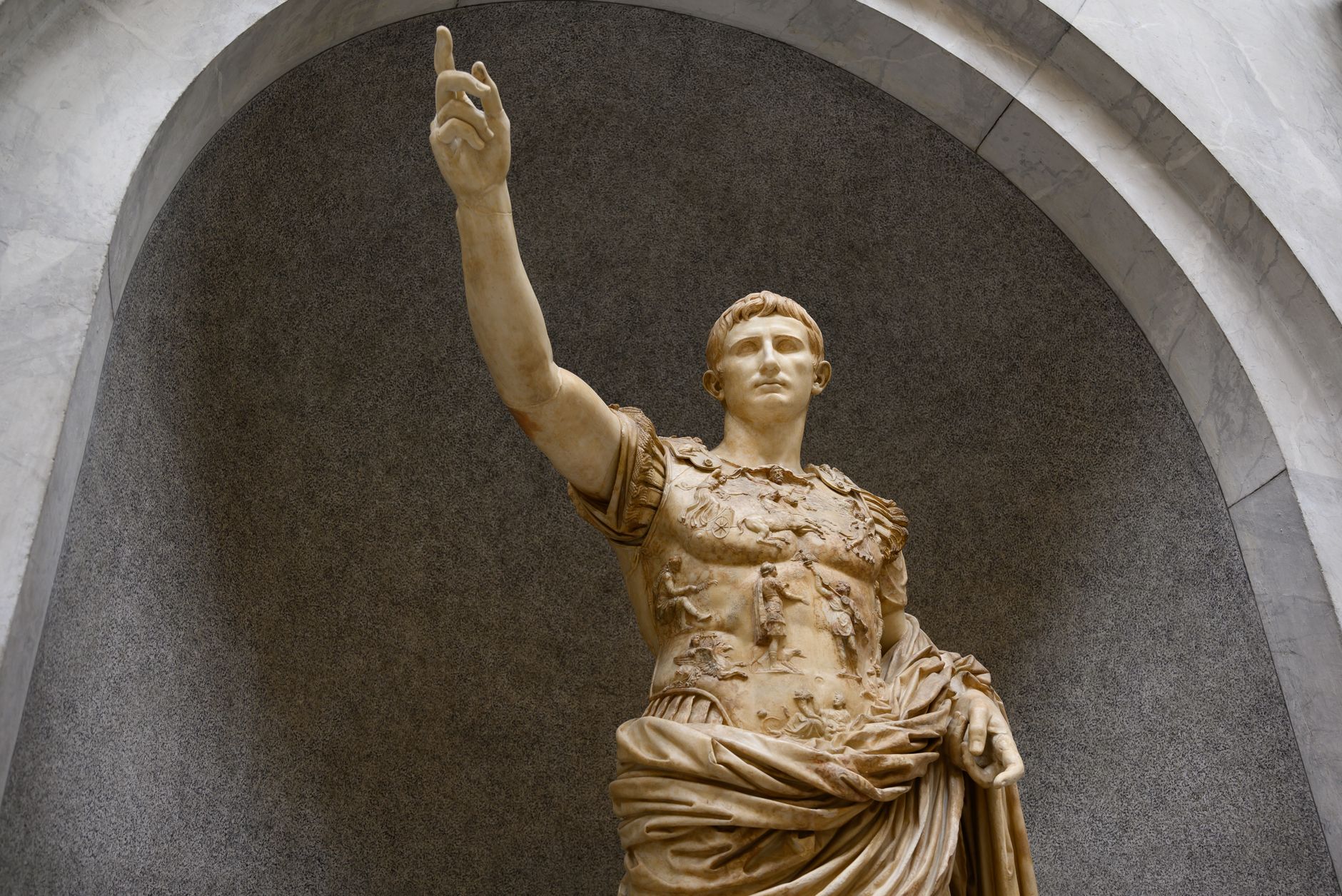
The Roman Senate declared Julius Caesar a god, Divus Julius, in 42 BC, two years after his assassination, and that single vote created a legal and religious category that shaped Roman politics for the next three centuries. Deification was never an automatic reward for holding the office: some emperors received it, some were explicitly refused it, and a living emperor was treated very differently in Rome than in the Greek-speaking provinces.
The first case: Julius Caesar's deification
Caesar's deification in 42 BC was partly genuine religious innovation and partly hard political calculation by his heir, Octavian, soon to become Augustus. Being the adopted son of a god, divi filius, 'son of the deified one,' gave Octavian enormous propaganda value as he consolidated power during the civil wars that followed Caesar's death. The idea of deifying a ruler was not new in the wider Mediterranean world; Hellenistic kings had been doing something similar for centuries, following the precedent set when Alexander the Great encouraged, or at least tolerated, divine honors for himself in the late fourth century BC, honors later claimed in varying degrees by the Ptolemaic and Seleucid dynasties that split his empire.
Augustus and careful ambiguity
Augustus, who ruled Rome from 27 BC until his death in AD 14, was notably cautious about his own divine status while alive, generally discouraging formal worship of himself as a living god within Italy, even as the imperial court and Augustus's own propaganda cultivated an aura of special, divinely favored status short of outright godhood. After his death, the Senate voted to deify him, and Cassius Dio records the famous (if clearly staged) account of a senator swearing he had witnessed Augustus's spirit ascending to heaven at the funeral. While alive, Augustus instead allowed worship of his genius, the protective spirit tied to any Roman household's male head, alongside the Lares of the crossroads in Italy, a carefully calibrated compromise that let communities honor him religiously without declaring him a full god outright during his lifetime.
How it worked: consecratio and the Senate's vote
Formal deification, consecratio, required a Senate vote, typically held after an emperor's death and usually tied to how well that emperor's memory was regarded by the ruling elite at the time. A new temple or priesthood might be established for the deified emperor, now called divus. The process was explicitly political as well as religious: it was essentially the Senate deciding whether a given reign deserved permanent religious honor.
Emperors and their deification status
| Emperor | Death | Deified? | Note |
|---|---|---|---|
| Julius Caesar | 44 BC (assassinated) | Yes, 42 BC | First Roman to be formally deified, as Divus Julius |
| Augustus | AD 14 | Yes | Senate vote shortly after his death |
| Tiberius | AD 37 | No | The Senate declined to deify him |
| Caligula | AD 41 (assassinated) | No | His memory was condemned rather than honored |
| Claudius | AD 54 | Yes | Deified despite being mocked after death in Seneca's satire |
| Nero | AD 68 | No | Declared a public enemy; memory condemned |
| Vespasian | AD 79 | Yes | Deification helped secure Flavian dynastic legitimacy |
| Domitian | AD 96 (assassinated) | No | Subjected to damnatio memoriae |
East vs. West: a real divide
In the Greek-speaking eastern provinces, cities had a long-standing tradition of honoring living rulers with cult worship, inherited from Hellenistic kingdoms that had deified figures like Alexander the Great's successors well before Rome existed as an empire. Greek cities readily extended this custom to living Roman emperors and governors, often alongside worship of Roma, the personified goddess of the city of Rome itself. In Rome and Italy, by contrast, formal state worship of a living emperor as a full god was treated far more cautiously, generally reserved for after death and a Senate vote. This east-west gap is one of the clearest illustrations of the broader theme covered in our piece on Roman religion's real differences from Greek practice, even within a single empire.
Checklist: genuine state deification vs. provincial flattery
- Was there a formal Senate vote, a consecratio, specifically in Rome?
- Was a dedicated temple or priesthood, such as a flamen, established for that divus in Italy?
- Is the 'worship' only attested in inscriptions from a Greek provincial city honoring a living emperor alongside local gods? That points toward local custom and flattery rather than Roman state theology.
- Did the emperor publicly decline or downplay divine honors while alive, as Augustus and Tiberius reportedly did in Rome? That signals how cautiously Romans at home actually treated living emperor worship.
Common mistakes
A common misconception assumes Roman emperors uniformly claimed to be living gods; in practice, most formal deification happened only after death, and several emperors were refused it outright. Another mistake collapses the real difference between Rome's cautious, Senate-controlled process and the much more immediate ruler-cult customs of the Greek East, treating emperor worship as one uniform practice across the whole empire. The imperial cult is better understood as a direct descendant of the comparative habits discussed in our article on interpretatio Romana, applied now to Roman rulers themselves rather than foreign gods.
Why some emperors were refused divine honors
Deification depended heavily on political memory. Emperors associated with tyranny, assassination plots against them, or deeply unpopular reigns, such as Nero and Domitian, were instead subjected to damnatio memoriae, a condemnation of memory that could include destroying statues and erasing inscriptions, the deliberate opposite of the honor given to the imperial cult's favored figures. The whole system shows the imperial cult functioning as much as a tool of political legitimacy as a genuine extension of Roman religious belief, a theme explored further on the category page for this cluster. Later emperors kept adjusting the rules as political needs changed: by the third century AD, deification had become close to routine for any emperor who died without open disgrace, a sign that the honor had drifted, over roughly two centuries, from a rare and carefully argued exception into something closer to standard administrative practice.
Sources
- Suetonius, Lives of the Caesars (Divus Julius; Divus Augustus) — Biographical accounts of Caesar's and Augustus's deification.
- Cassius Dio, Roman History — Records the Senate's deification process and the account of Augustus's funeral.
- Tacitus, Annals — Discusses emperor worship and flattery in the provinces under the early principate.
Frequently asked questions
Did Roman emperors think they were gods while they were alive?
Generally not in Rome itself; most emperors, including Augustus and Tiberius, discouraged formal worship of themselves as living gods within Italy. In the Greek-speaking eastern provinces, however, cult worship of the living emperor was far more common and culturally normal.
What does 'divus' mean?
Divus means 'deified,' a formal title granted to an emperor (or occasionally another figure) after the Roman Senate voted to recognize them as a god, usually after their death.
Which Roman emperors were refused deification?
Tiberius, Caligula, Nero, and Domitian were among the emperors not deified by the Senate; several of them instead suffered damnatio memoriae, a formal condemnation and erasure of their memory.
Was emperor worship the same everywhere in the Roman Empire?
No. In Rome and Italy, deification was a cautious, Senate-controlled process usually reserved for after death. In the Greek-speaking East, cities had an older tradition of honoring living rulers with cult worship and extended it readily to Roman emperors.